
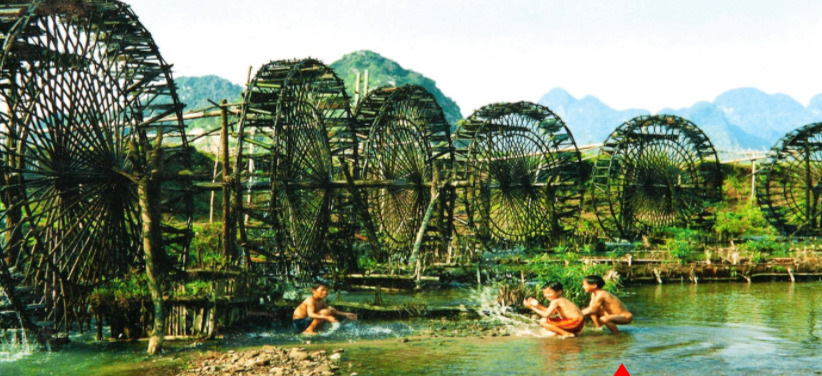
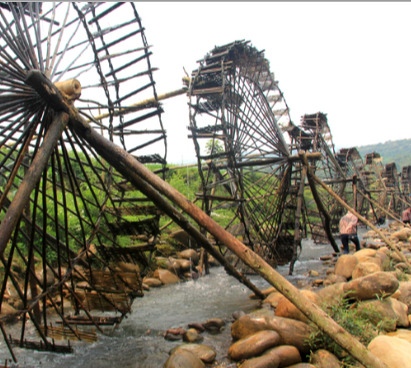
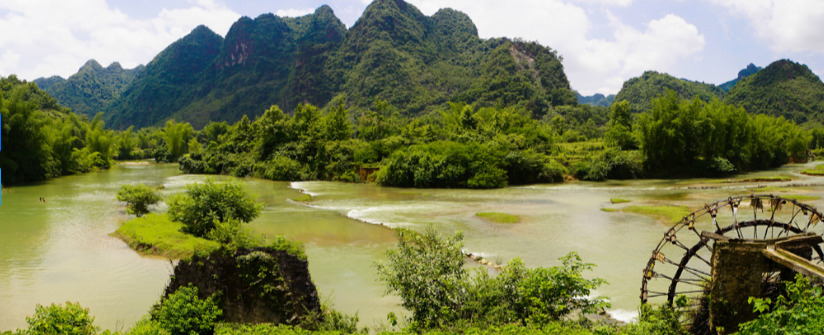
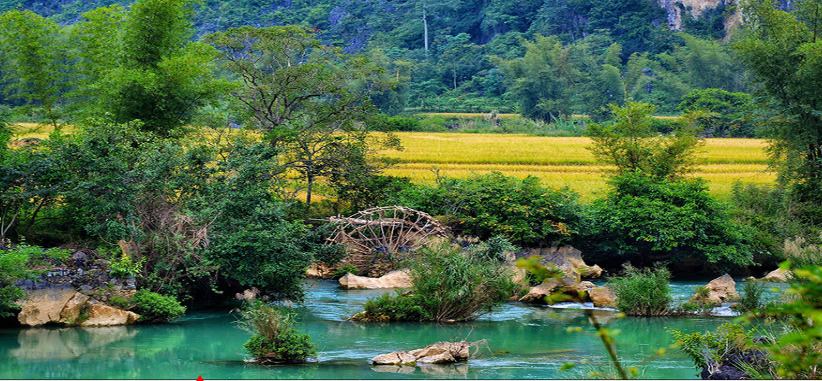

For as long as anyone can remember, the image of waterwheels, like giant wheels slowly turning, has contributed to the poetic beauty of the Quây Sơn River. This heritage site is located in Đàm Thủy commune, Cao Bằng province.
Skillfully crafted from materials found in the mountains and forests, the waterwheel consists of three main components: the central shaft, the impeller, and the rotor blades. It utilizes the power of natural water currents to lift water to higher levels, channeling it to rice fields and villages. They demonstrate the remarkable creativity of the local people in conquering nature to serve production and daily life.
Often likened to an "eternal machine," the waterwheel operates day and night. If bronze tools were invented in connection with the rice-farming civilization of the lowlands, then the waterwheel is a witness to the rice-farming civilization of the mountainous regions. More than just an irrigation structure, the waterwheel has become a unique cultural feature of the ethnic groups in Cao Bằng.