
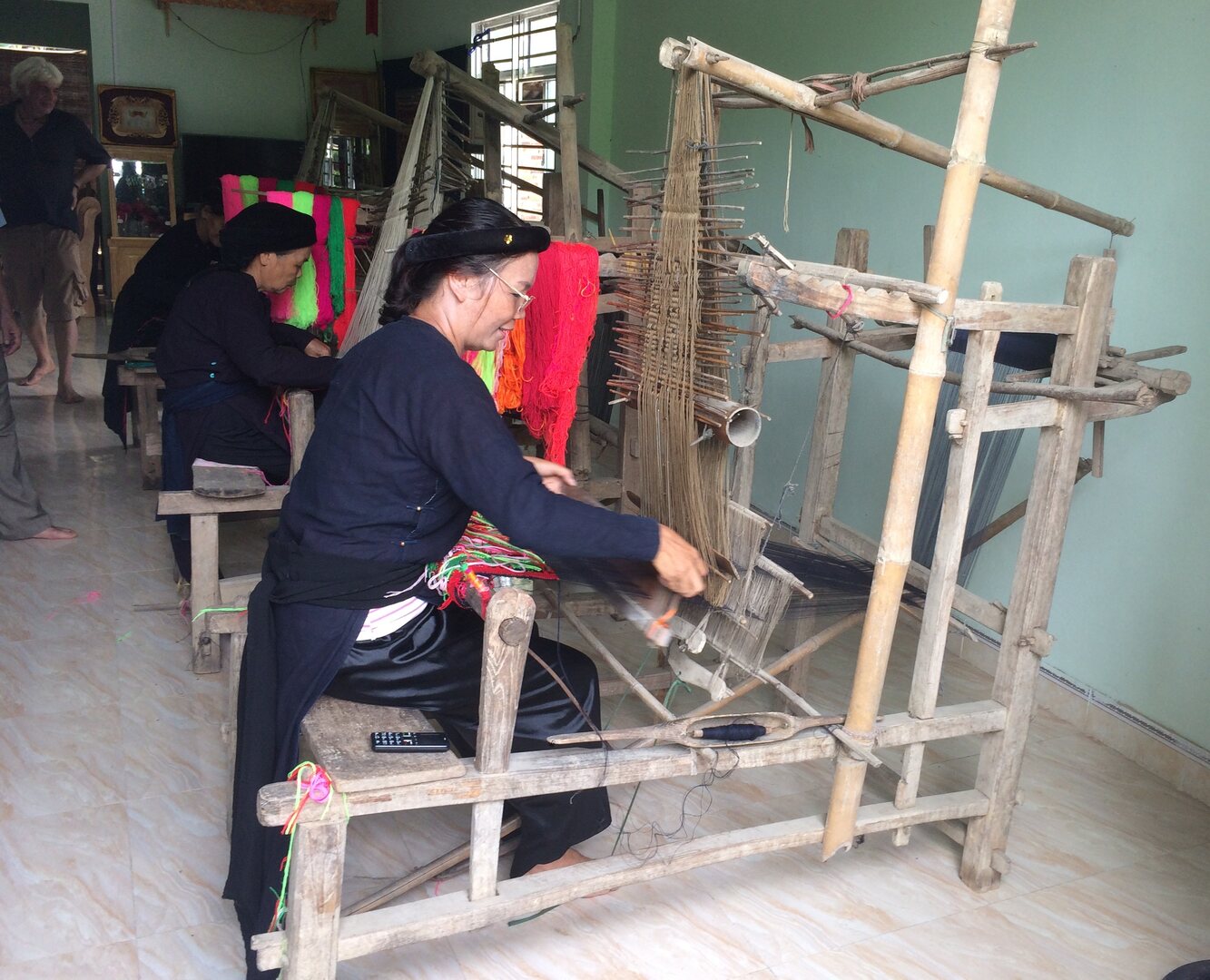
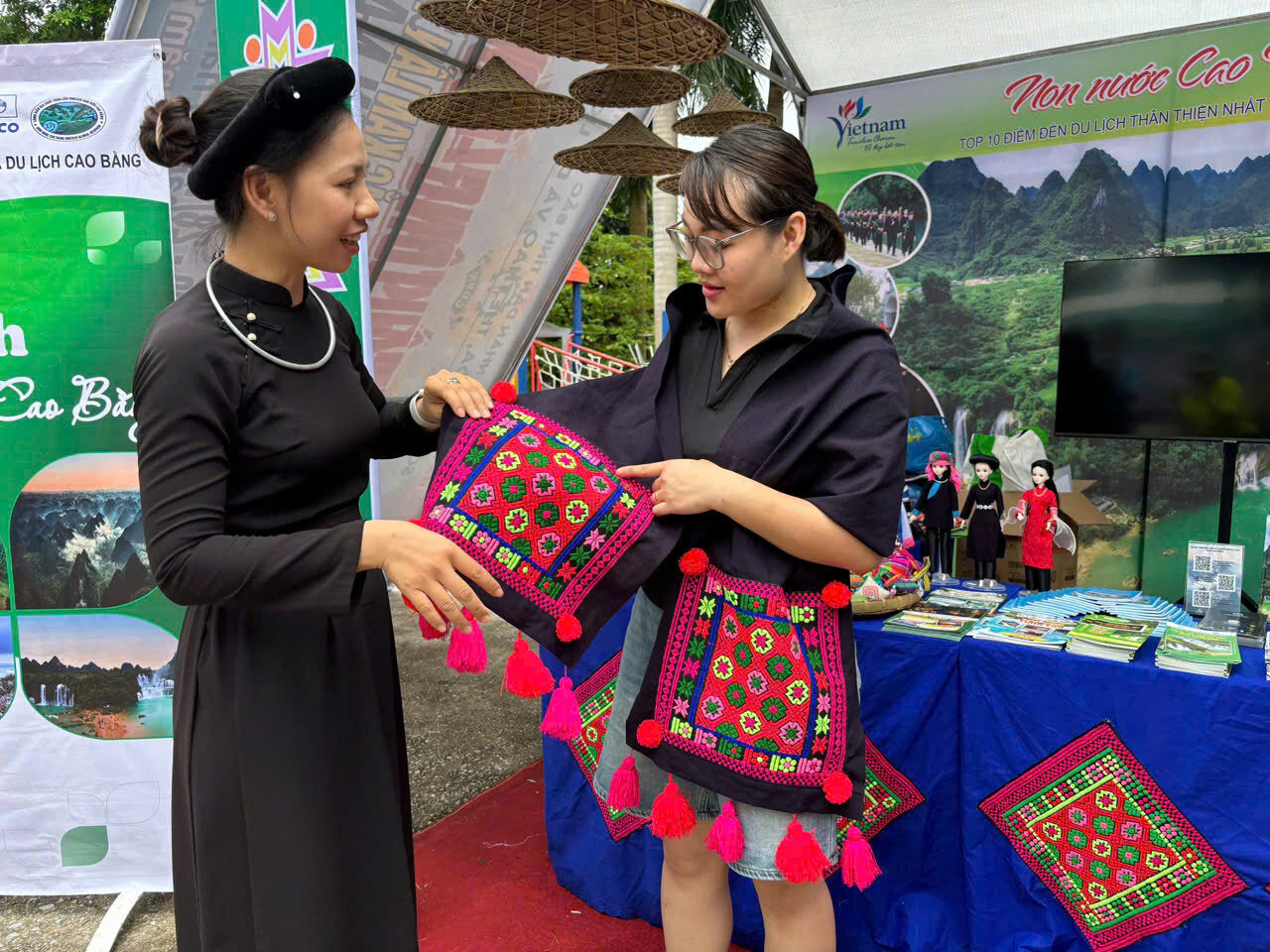
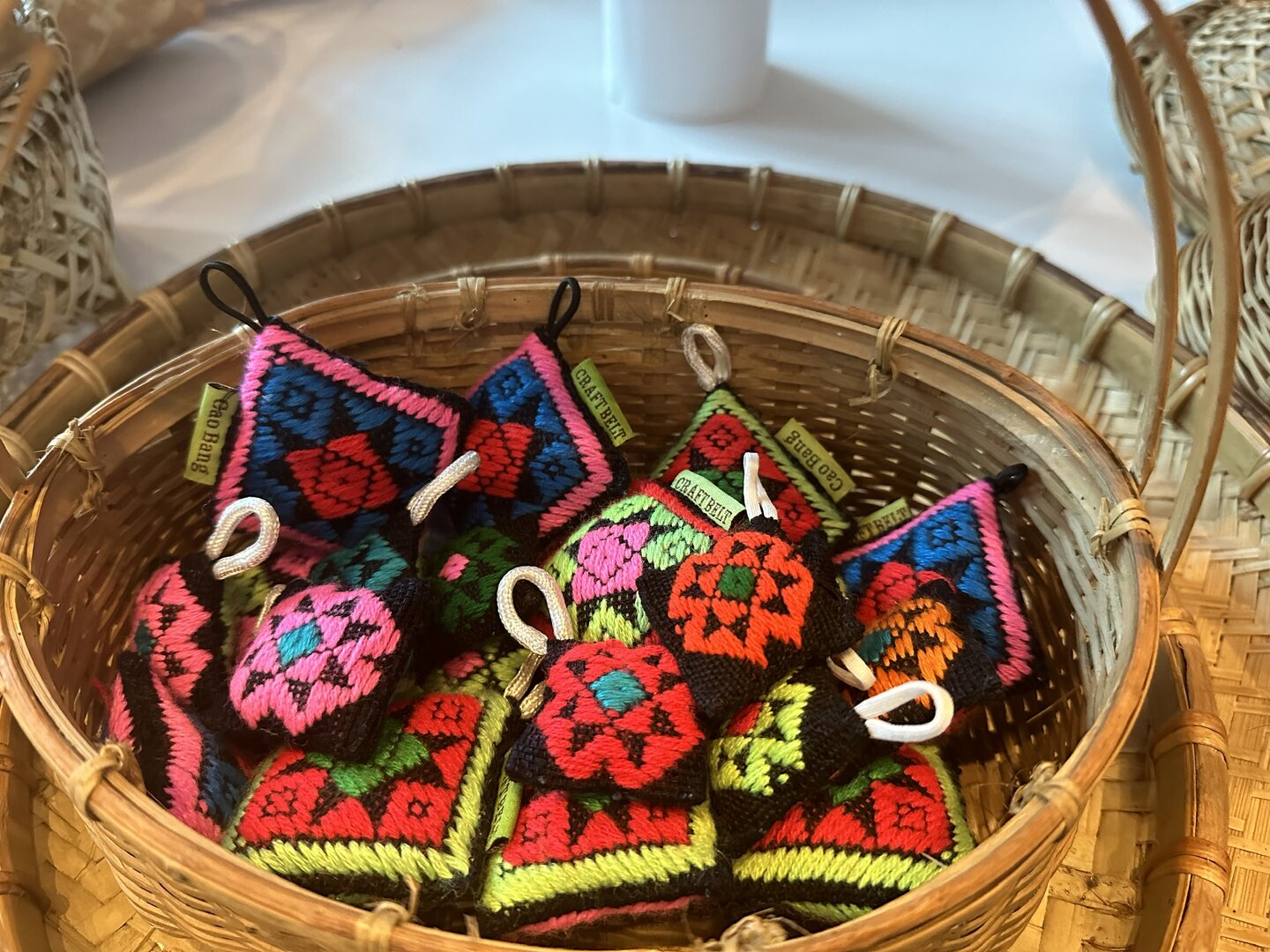
The *tho cam* (traditional brocade/textile) of the Tay people manifests in vibrant, colorful fabrics—a crystallization of folk wisdom, beliefs, and a way of life passed down through generations. Recognized as a piece of national intangible cultural heritage by the Ministry of Culture, Sports and Tourism in 2023, these textiles offer a rich, immersive experience for those exploring the Non Nuoc Cao Bang UNESCO Global Geopark.
A Legacy of Heritage and Hand-weaving Craftsmanship
The craft of weaving *tho cam* has been intertwined with the Tay people for generations. From a young age, young women are taught the essential skills: cultivating cotton, dyeing with indigo, spinning thread, and operating the loom to create intricate patterns.
The Art of Indigo and Patterns: In the aesthetic vision of the Tay people, the deep, blue-black hue of indigo represents the earth—symbolizing stability and the nurturing of life. The indigo-dyed fabric serves as both a canvas and a space for expressing their cosmological worldview.
A diverse array of patterns—featuring pear, peach, and plum blossoms—captures the essence of spring, reflecting the vibrant pulse of the Cao Bang mountains and forests as the season arrives. Tay women weave these blooming wild flowers into the indigo fabric, preserving nature’s most beautiful and radiant moments; these motifs signify the blossoming of life and a resilient vitality that endures even the harshest, coldest winters.
Creatures of the Borderlands (Deer, stags, birds, and butterflies): These motifs reflect a profound harmony between humanity and the universe. Deer and stags evoke a sense of peace and gentleness; birds symbolize freedom and the connection between earth and sky; while fluttering butterflies represent the wondrous, ever-changing nature of all things. The eight-petaled flower (representing the five directions and eight cardinal points): This serves as a focal point for the Tay people’s cosmological worldview, embodying a desire for balance and harmony among all things, while reflecting the encompassing protection of heaven and earth from every direction.
The rhombus (diamond shape): A motif symbolizing the seed of life—the sprouting, continuous growth, and proliferation of both the natural world and human lineage.
An intricate process: Creating a piece of handmade brocade requires meticulous attention across several stages: spinning yarn, setting up the loom, patterning, and weaving. The most challenging phase—creating the patterns—demands both skillful hands and a refined aesthetic sense; it can sometimes take several days to complete.
A story of community cohesion and modern vitality
Beyond its presence in daily life, brocade plays a vital role in *Then* rituals, weddings, *cap sac* (coming-of-age/initiation) ceremonies, and other traditional customs.
The enduring vitality of craft villages: The art of weaving is persistently maintained in many villages, most notably in Luong Noi hamlet (Ha Quang commune). This place reflects the dedication of "Vietnamese Craft Village Artisan" Nong Thi Thuoc and many other Tay women, who keep the craft alive and pass it on to the younger generation.
Adaptive innovation and international exchange: Building upon traditional patterns, the Tay people have developed practical, contemporary items such as keychains, handbags, scarves, wallets, and brocade buttons. Furthermore, brocade from Cao Bang has reached beyond local borders through cross-border cultural exchanges, helping to share the value of this heritage with the international community. Visitor Information:
Location: Luong Noi Hamlet, Ha Quang Commune, and various traditional brocade-weaving villages across Cao Bang Province (part of the northern “Journey to the Origins” route within the Non Nuoc Cao Bang UNESCO Global Geopark).
Suggested Activities: Explore the craft villages, learn about the traditional process of weaving intricate patterns, interact with local artisans, and browse for handmade brocade products and unique, creative souvenirs.