
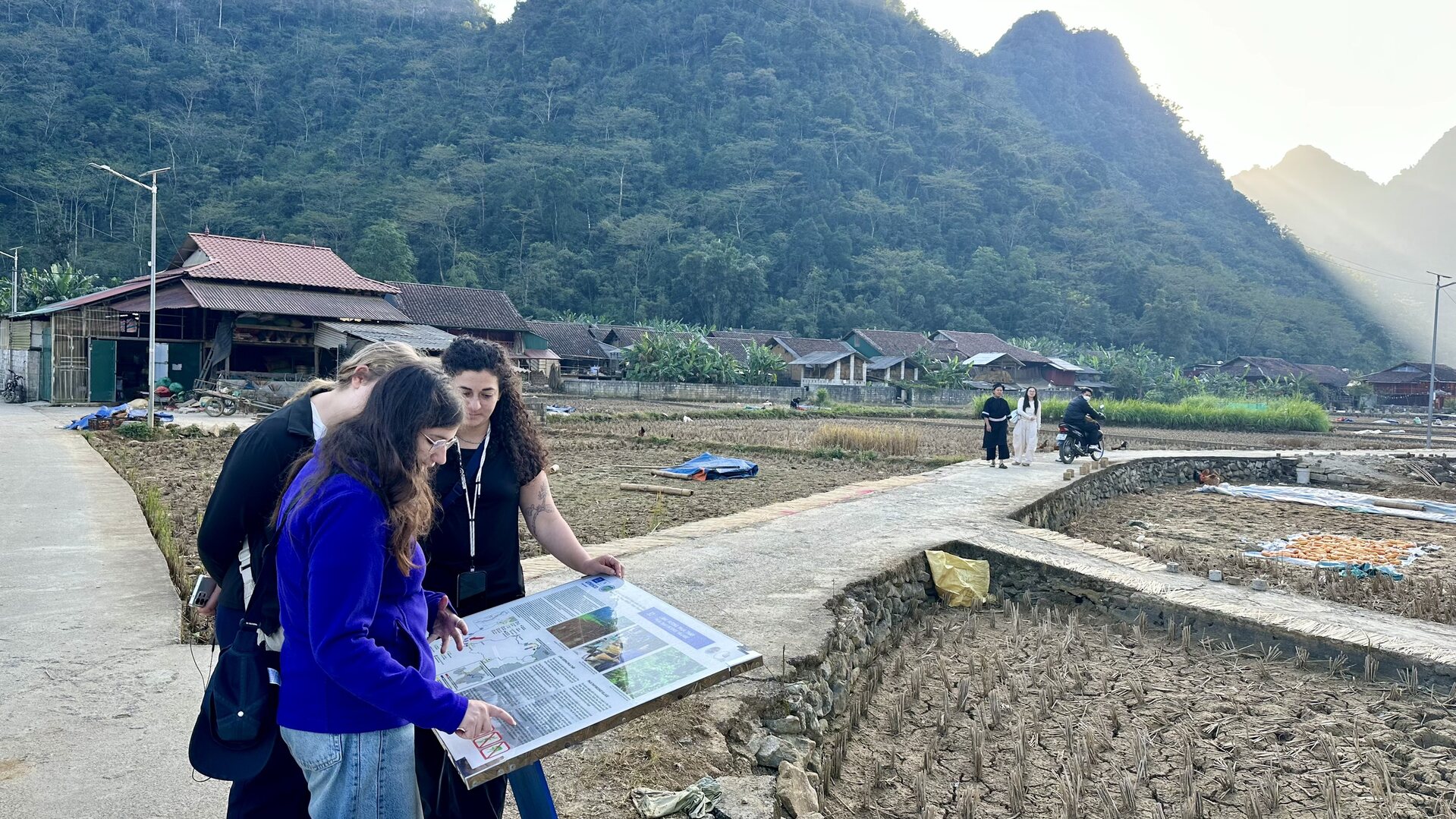
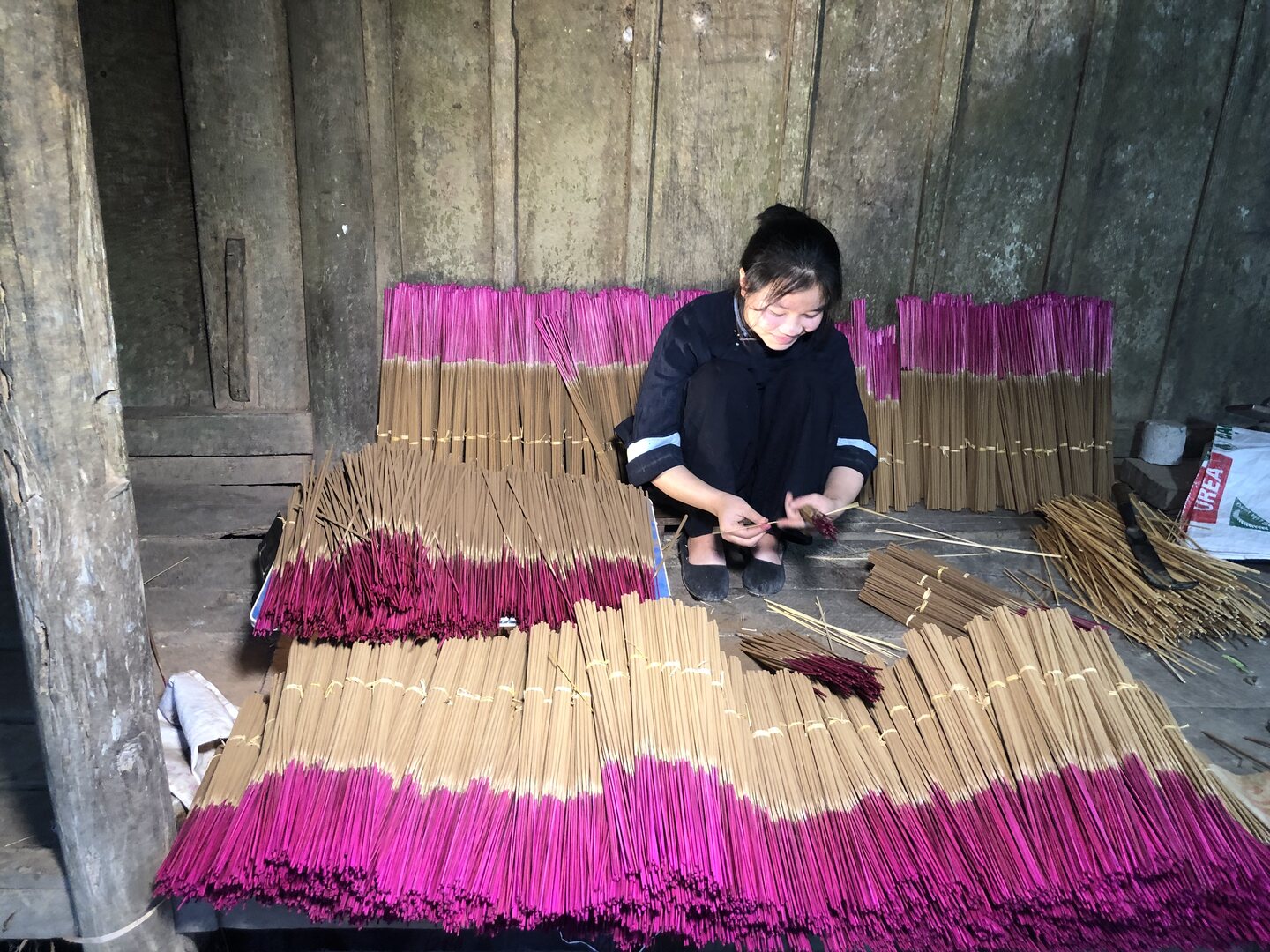
Nestled at the foot of majestic mountains in Quang Uyen Commune, the village of Phja Thap is a tranquil settlement home to over 50 Nung An ethnic households. It serves as a distinctive stop along the eastern route—themed "Experiencing Indigenous Culture in a Wonderland"—within the Non Nuoc Cao Bang UNESCO Global Geopark.
Name, Beliefs, and Centuries-Old Craftsmanship
In the Nung An language, "Phja Thap" means "Sword Mountain," a name that evokes the arduous journey of the ancestors as they cleared the land and overcame countless challenges to establish a permanent home.
Origins of the Incense-Making Craft: Over a century ago, when the Nung An people settled in this rugged limestone valley, they sought out natural materials from the deep forests to craft their first incense sticks—offerings intended for their ancestors, seeking protection amidst the wild, mountainous terrain.
Spiritual Duty and Transmission: The people of Phja Thap believe that an incense stick acts as a sacred bridge between the physical world and the spiritual realm. Consequently, incense-making has become a sacred duty, passed down through generations. From the elderly to children as young as five or six, everyone is skilled in whittling bamboo and rolling incense. Today, nearly every household in the village continues this craft, creating a cohesive indigenous cultural landscape.
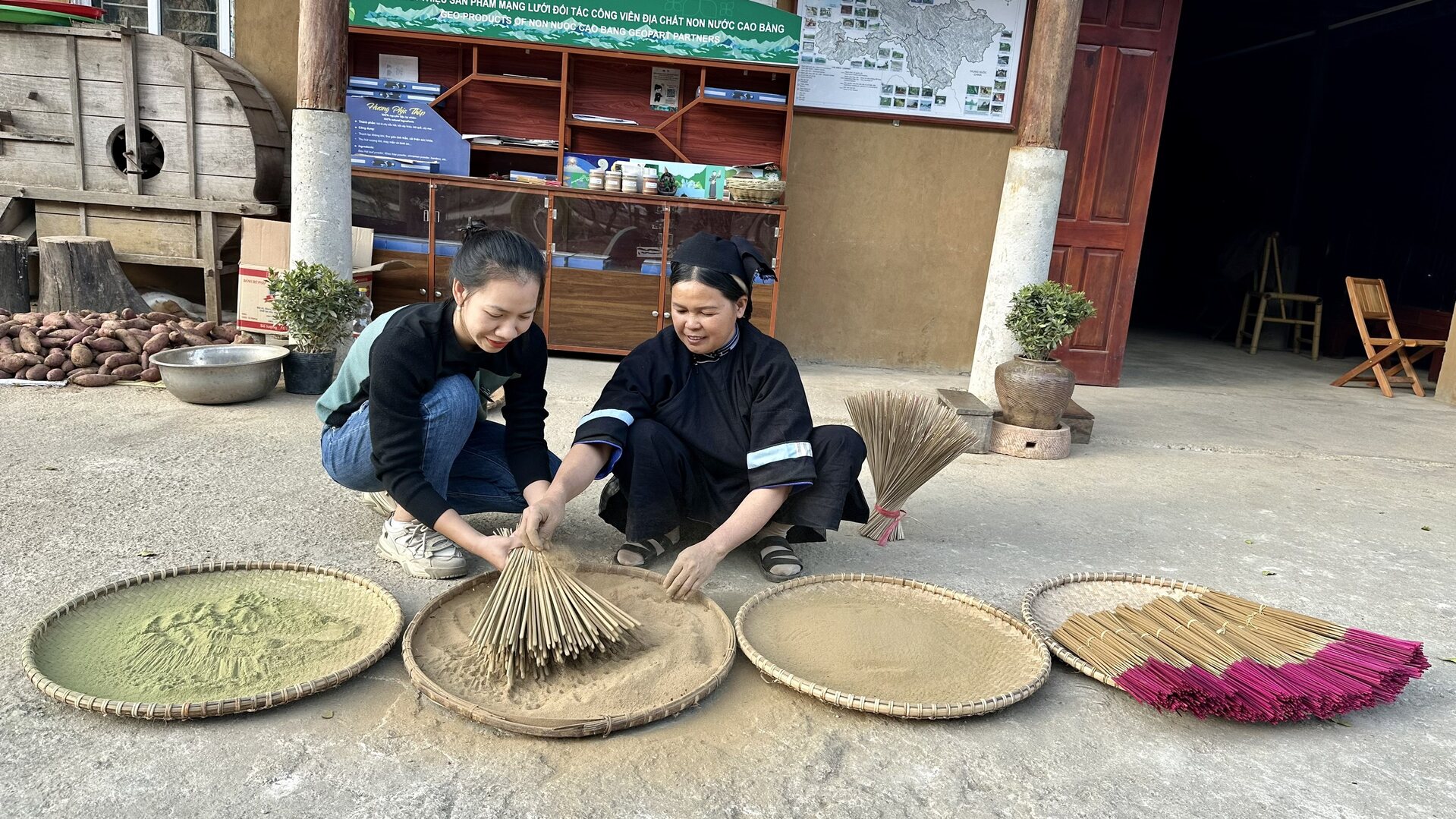
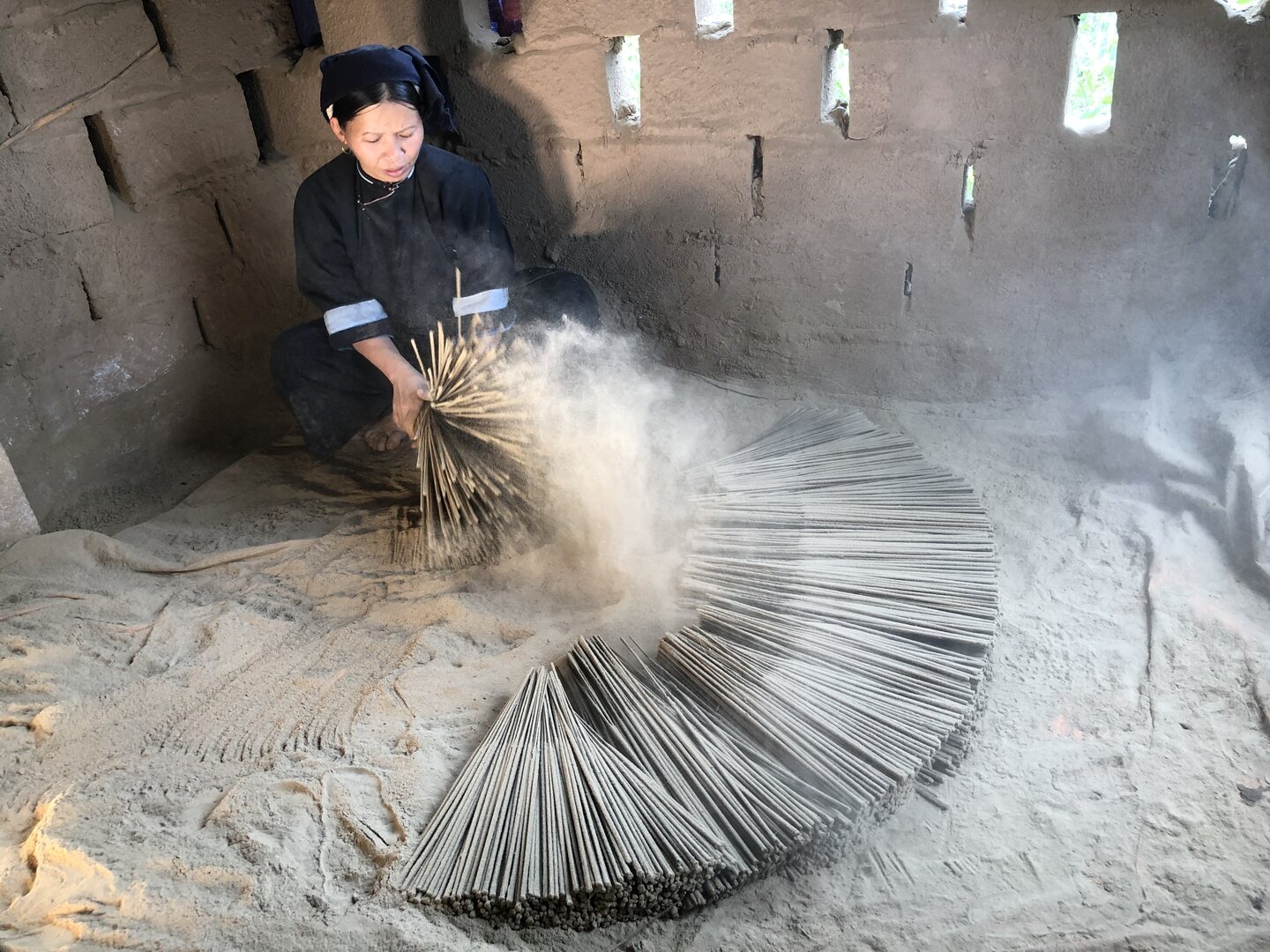
All-Natural Incense-Making Technique: Phja Thap incense is crafted without the use of any chemicals. The sticks are made from *mai* (a type of bamboo) or *may muoi*—a plant with long internodes—which is split and whittled into smooth, round sticks approximately 40 centimeters in length. The binding agent is a special adhesive derived from the dried and pulverized leaves of the *bau hat* plant. The incense sticks are dipped in water, rolled in *bau hat* (a type of local leaf) powder, and then coated with sawdust—a process repeated four times. Finally, they are rolled in a fragrant powder and left to dry on bamboo racks. The base of each stick is dyed with a natural red pigment derived from finely ground pine bark or decayed pine wood.
Evolution into a Community-Based Tourism Destination
Once a small-scale craft village serving local markets, Phja Thắp has undergone an impressive transformation:
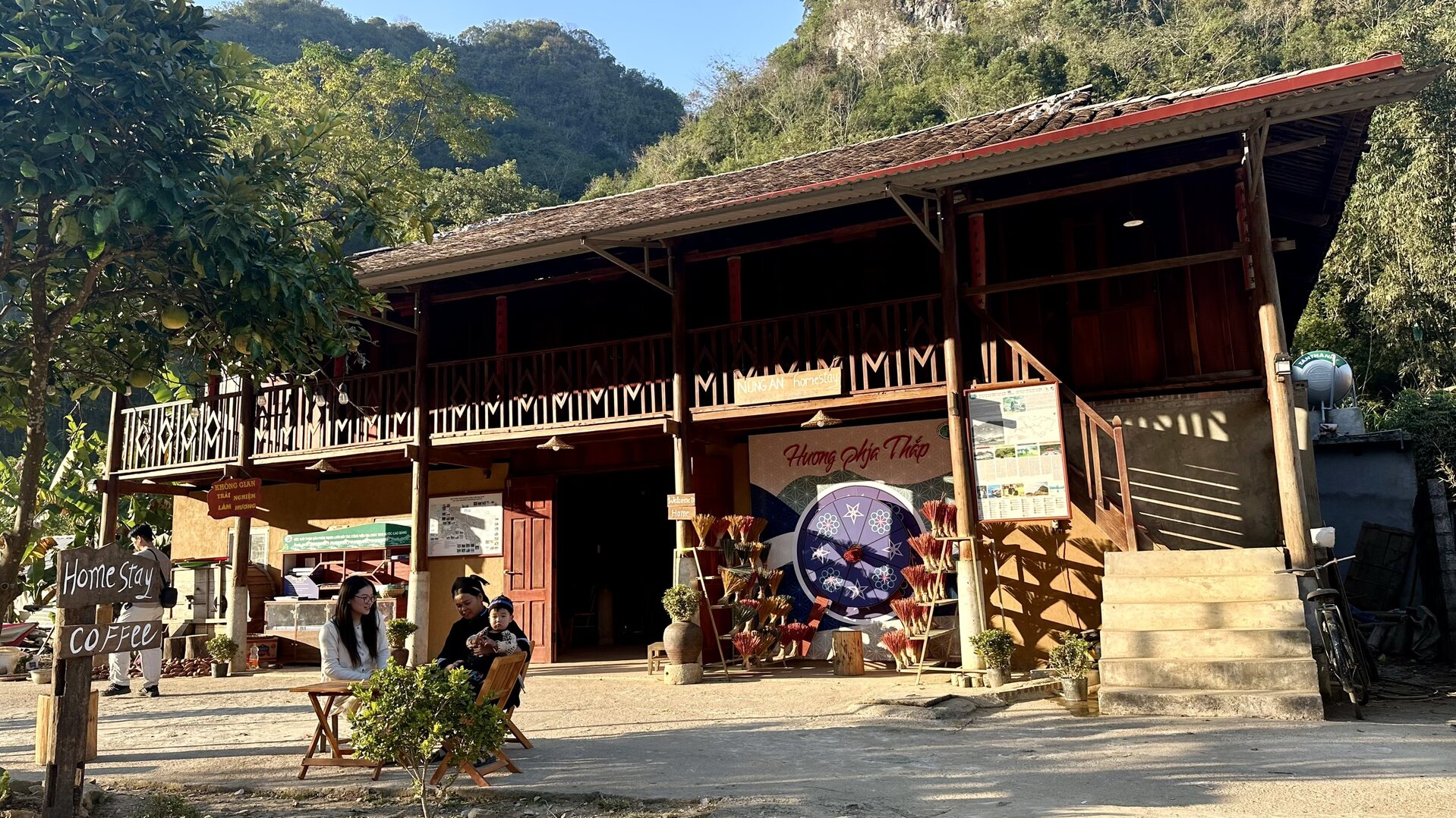
2016: Recognizing its unique heritage potential, Phja Thắp received investment to develop into a community-based tourism village within the Geopark. Infrastructure was upgraded, and traditional wooden stilt houses were renovated into homestays for visitors.
2021: The village was officially recognized by the Cao Bằng Provincial People’s Committee as a "Traditional Craft Village," helping to improve the livelihoods and ensure sustainable income for the local residents.
Unique Experiences in Phja Thắp Village
Visitors to Phja Thắp can immerse themselves in a variety of cultural and eco-tourism activities:
“A Day as a Nùng An Artisan”: Try your hand at dipping bamboo sticks into *bau hat* adhesive, coating them with fragrant powder, and mastering the technique of “fanning out” the incense to dry on bamboo racks. You can even take home bundles of incense—scented with the essence of mountain wood—as a unique souvenir.
Capturing the “Blooming Season of Incense Flowers”: On sunny days, the village courtyards, stone fences, and pathways are transformed by vibrant, crimson-red “incense flowers”—bundles fanned out to dry. These striking displays stand out against a backdrop of golden, ripening rice paddies that wind around the surrounding mountains. Local lifestyle and culinary experiences: Stay in a traditional wooden stilt house and join your hosts in the kitchen to prepare local delicacies, such as Phuc Sen roasted duck (seasoned with *mac mat* leaves), smoked sausage, fermented pork (*thit chua*), and *banh khao* (a traditional sweet cake). In the evening, gather around the hearth to enjoy the soulful melodies of *Luon* and *Then* singing.
Explore nearby attractions: Try your hand at forging—wielding a hammer and operating the bellows—at the Phuc Sen blacksmithing village, or conquer the spectacular seven-tiered Ma Phuc Pass, where you can observe the geological boundary between ancient subterranean volcanic rock and pinkish-white limestone.
Visitor Information:
Location: Phja Thap Village, Quang Uyen Commune (part of the eastern tourism route of the Non Nuoc Cao Bang UNESCO Global Geopark).
Suggested activities: Learn the craft of handmade incense from local artisans, stay in a traditional Nung An wooden stilt house, savor authentic local cuisine, photograph the vibrant racks of drying incense, and engage with traditional folk arts and performances.