
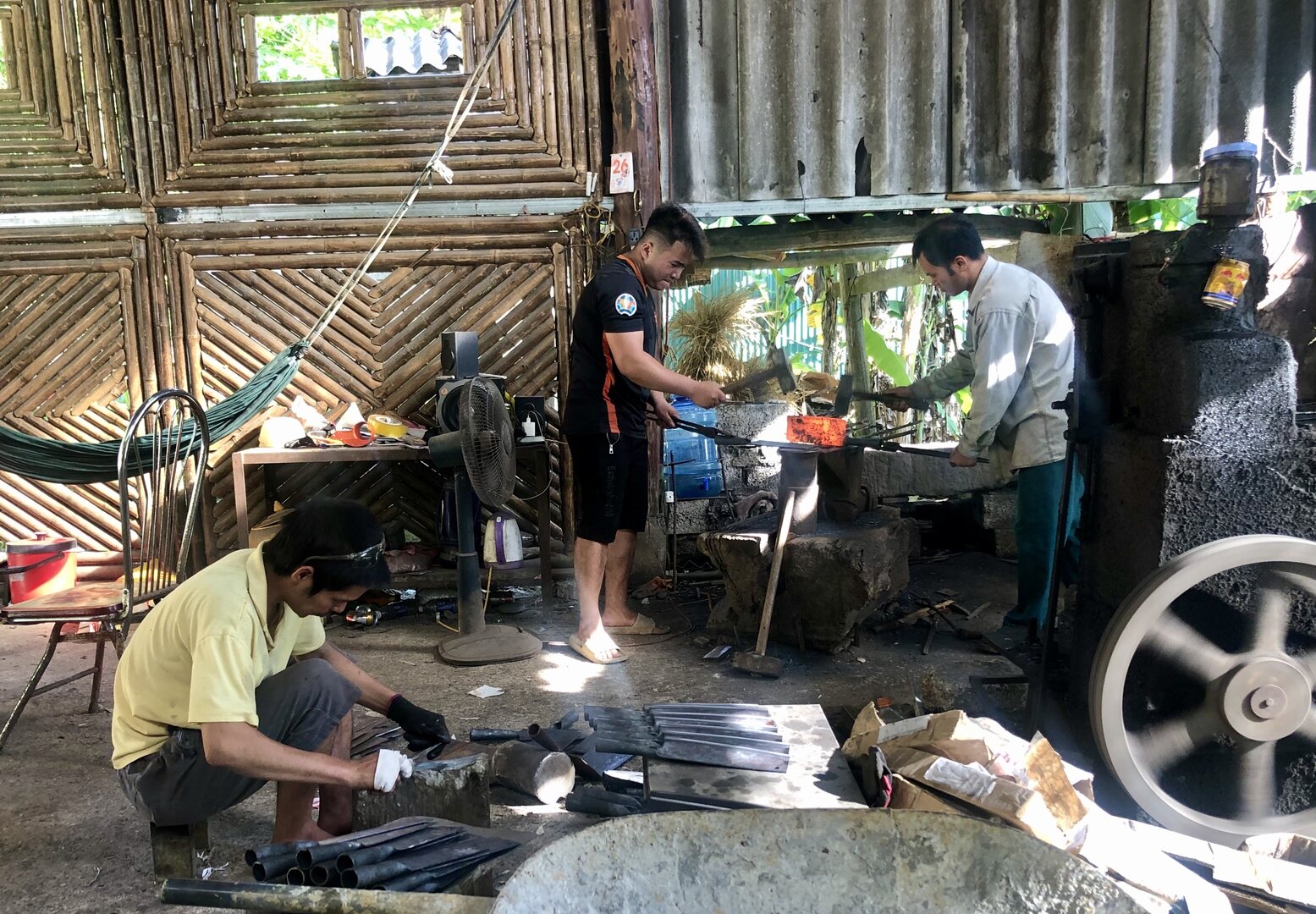
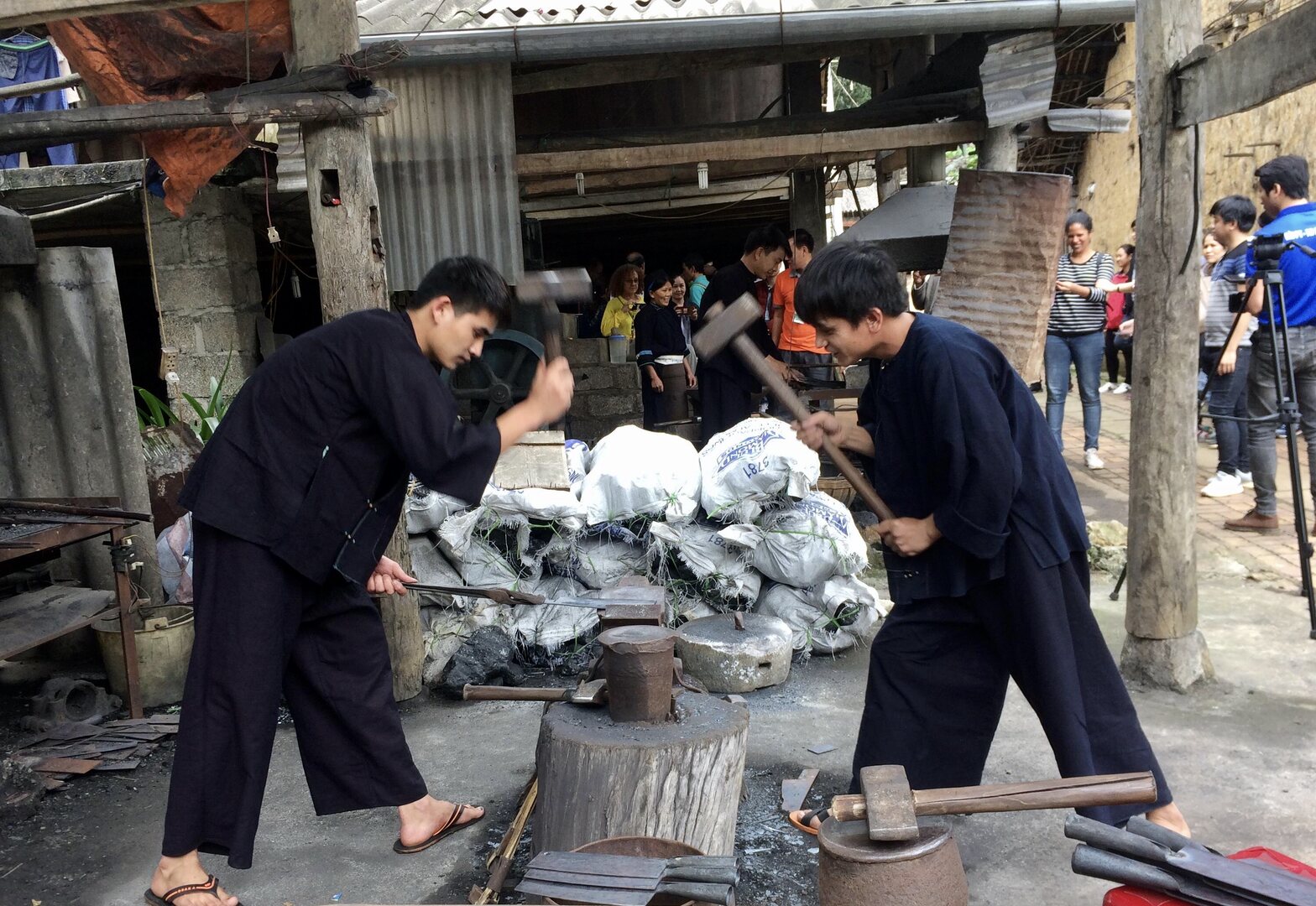
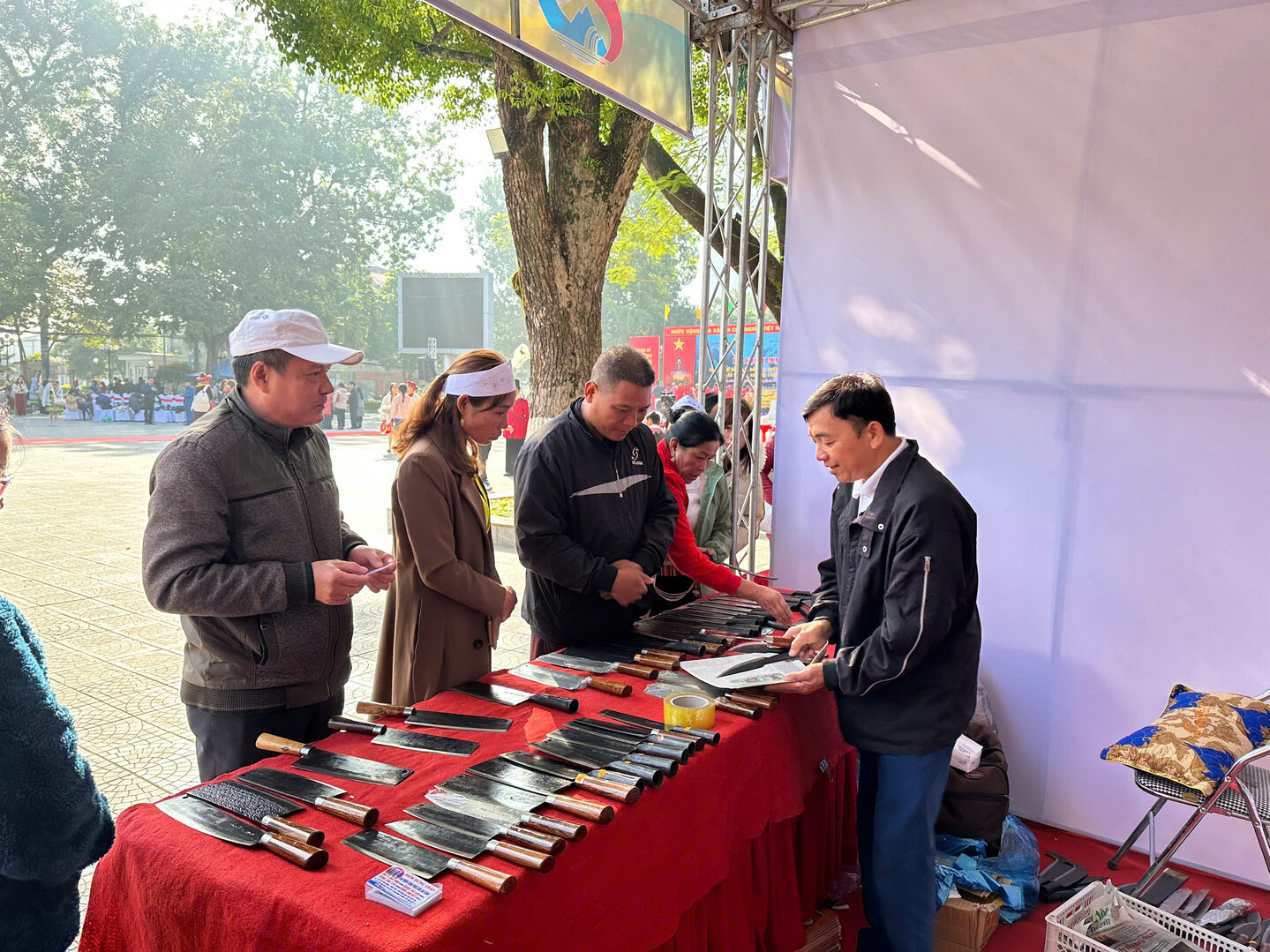
Pac Rang Community-Based Tourism Village, located in Quang Uyen Commune, is a unique cultural heritage site situated within the core zone of the Non Nuoc Cao Bang UNESCO Global Geopark. For centuries, this village has been renowned as the largest "hand-forging workshop" in Northern Vietnam, where the rhythmic sound of hammers striking metal echoes against the surrounding cliffs. The village is home to over 50 Nung An ethnic households that continue to preserve traditional crafts, including blacksmithing, weaving, indigo dyeing, and basketry. The residents live in ancient stilt houses topped with traditional *yin-yang* (curved) roof tiles, wear indigo-colored traditional attire, and spend their days engaged in diligent farming and craft production.
The Origins: A Weapon-Forging Workshop Dating Back to the 11th Century
The story of Pac Rang does not begin with tourism; rather, it originates from the flickering flames of a forge—a legacy deeply intertwined with a heroic chapter of resistance against foreign invaders:
A Weapon-Forging Hub from the 11th Century: The craft of manual forging in Pac Rang spans nearly 1,000 years. In the 11th century, the prominent leader Nung Tri Cao raised an army to resist the invading Song dynasty forces. He chose the Phuc Sen valley as a fortified base, gathering the most skilled blacksmiths in the village of Pac Rang to secretly manufacture weapons—such as swords, spears, and blades—for his troops.
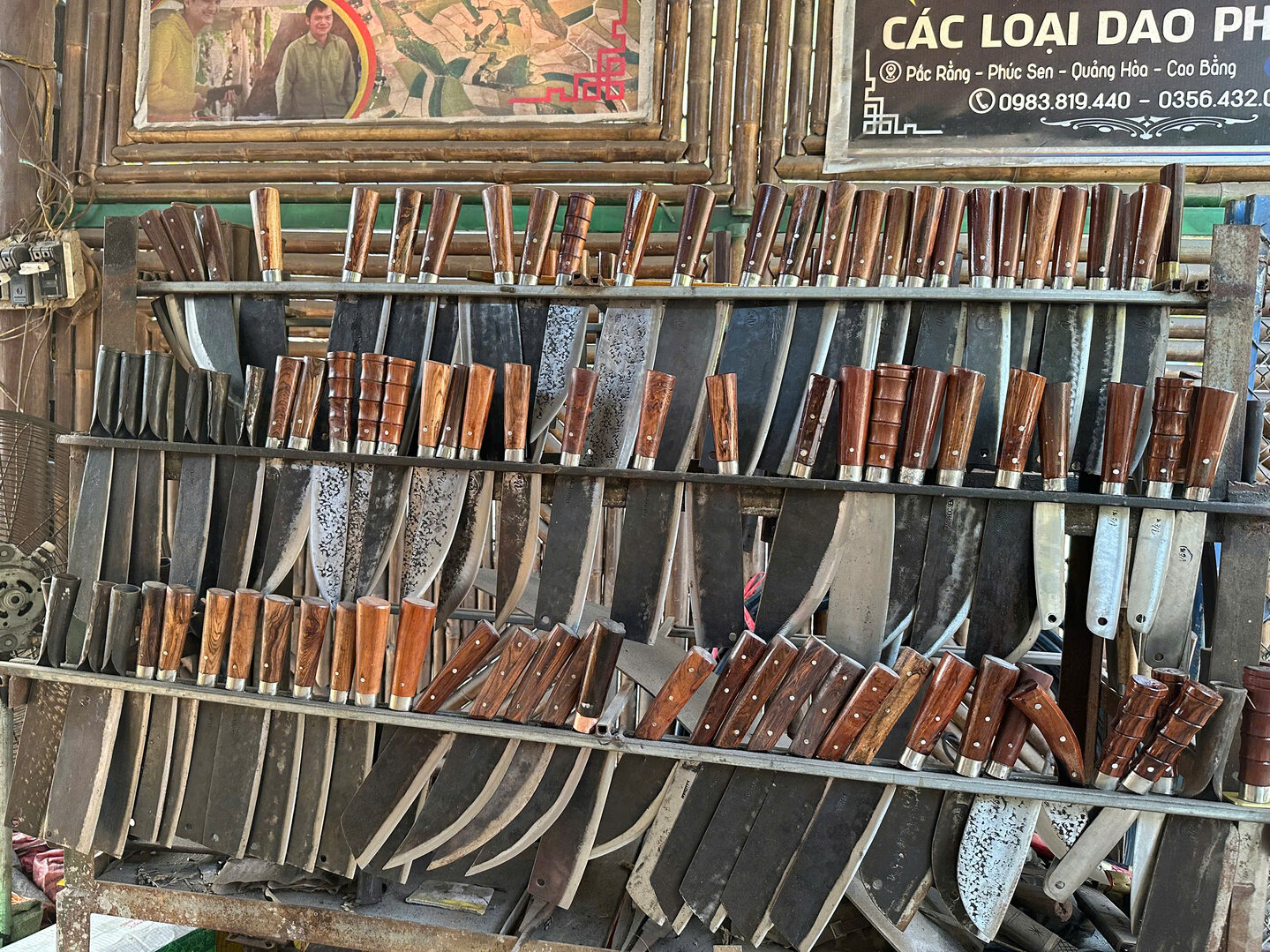
Transitioning to Peacetime: Following the war, the Nung An people of Pac Rang kept the fires of their forges burning, shifting their focus to the creation of agricultural and labor tools, including knives, axes, sickles, and hoes. By utilizing steel sourced from repurposed automotive leaf springs and employing specialized tempering techniques, the local artisans have created tools that are synonymous with exceptional sharpness and durability. A Measure of Manhood: For the Nùng An people, blacksmithing is the very soul of the village, governed by an unwritten rule: "A young man growing up in the village is not considered a mature adult unless he knows how to wield a hammer and temper steel." This philosophy has kept the forges of Pắc Rằng burning bright for a thousand years.
Evolution into a Community-Based Tourism Village
Once an agricultural village rooted in traditional craftsmanship, Pắc Rằng has undergone three significant stages of transformation:
Laying the Foundations (2011–2014): Thanks to the well-preserved, traditional two-story stilt houses—topped with distinctive *âm dương* (yin-yang) clay tiles—Pắc Rằng was selected as a pilot site for community-based tourism. The local Nùng An residents received support to relocate livestock enclosures from beneath their stilt houses, install biogas digesters to protect the environment, and undergo training in operating homestays for visitors.
Recognition as Heritage (2019): The traditional blacksmithing craft of Phúc Sen was officially designated a National Intangible Cultural Heritage by the Ministry of Culture, Sports and Tourism. This served as a major catalyst, establishing Pắc Rằng as a prominent stop along the eastern tourism route, themed "Experiencing Indigenous Culture in a Wonderland."
A Sustainable Tourism Model: Today, the village—home to over 60 households—has developed a professional network of homestays. It is closely integrated with the broader Phúc Sen craft cluster—which includes the blacksmithing of Pắc Rằng, the *âm dương* tile-making of Lũng Rì, the traditional paper-making of Quốc Dân, and the incense-making of Phja Thắp—thereby generating a sustainable source of income for the local community. Unmissable Experiences in Pac Rang
Upon arriving in Pac Rang, visitors can immerse themselves in the vibrant rhythm of local cultural life:
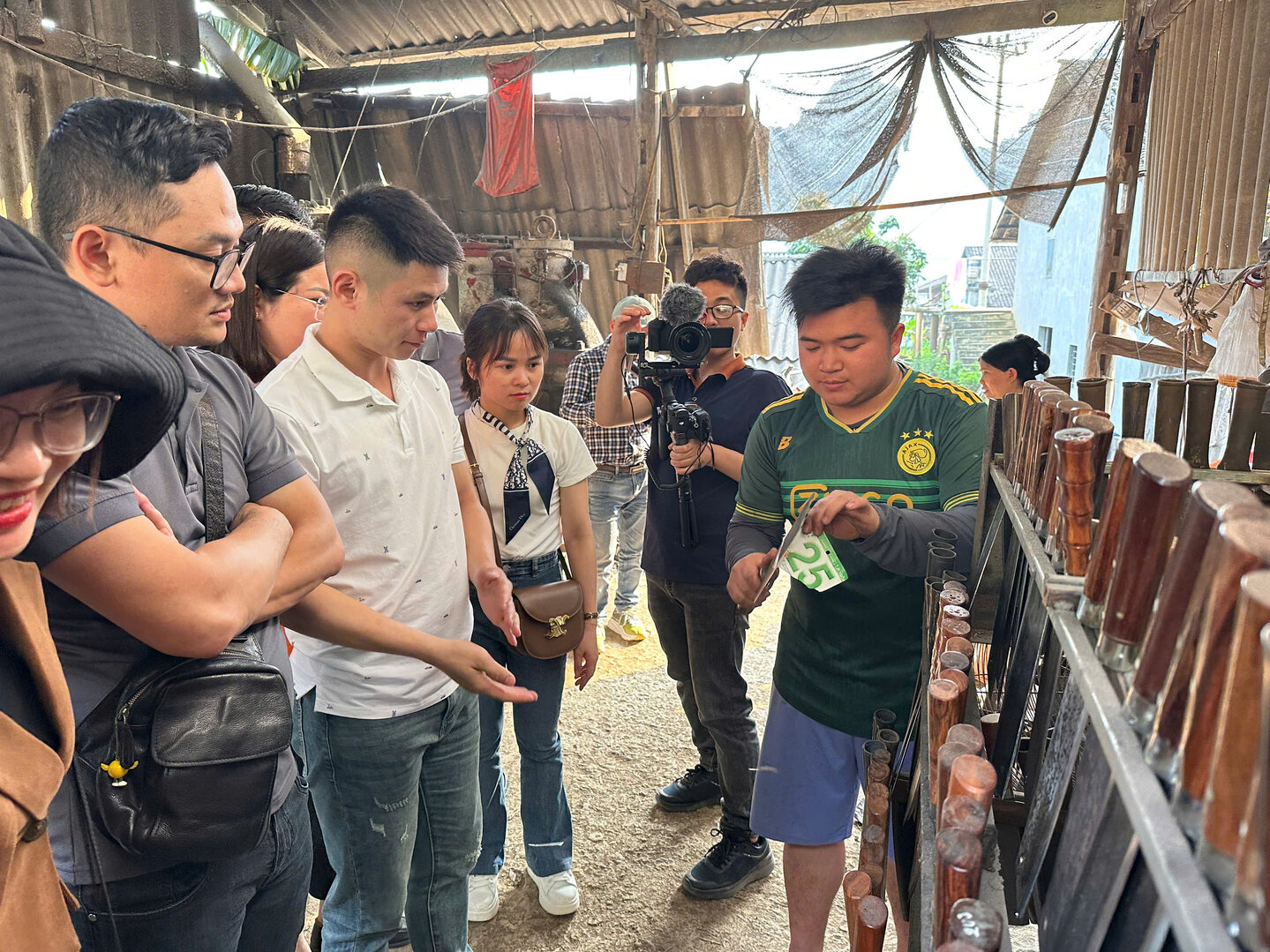
Try your hand at blacksmithing: step into the forge to rhythmically swing a hammer, operate the bellows, learn to gauge the temperature of glowing steel to determine the perfect moment for tempering, and purchase high-quality, handcrafted knives as unique souvenirs.
Discover and try on the traditional indigo-dyed attire of the Nung An people.
Stay in a local homestay—a traditional stilt house topped with a distinctive "yin-yang" tiled roof.