
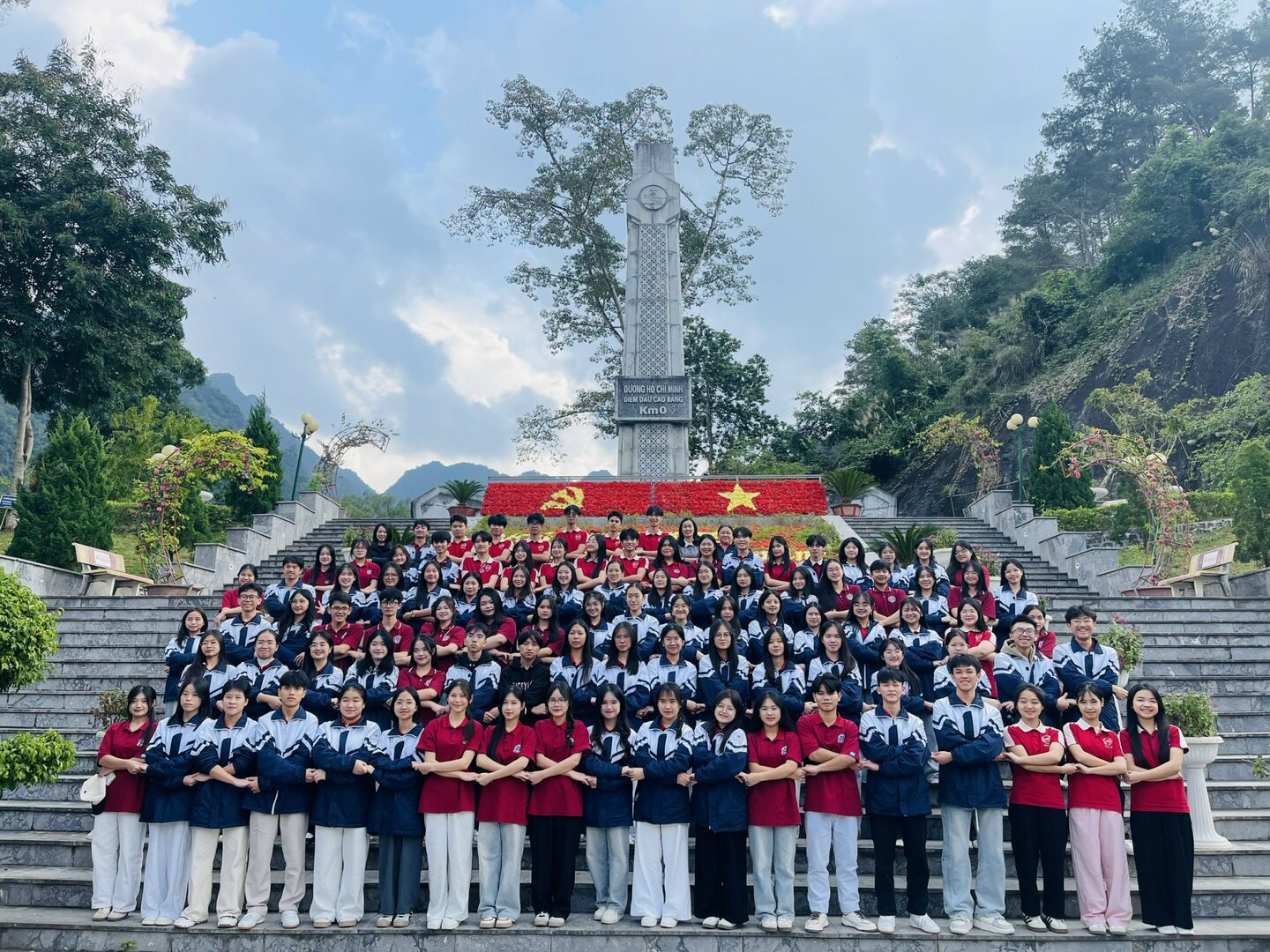
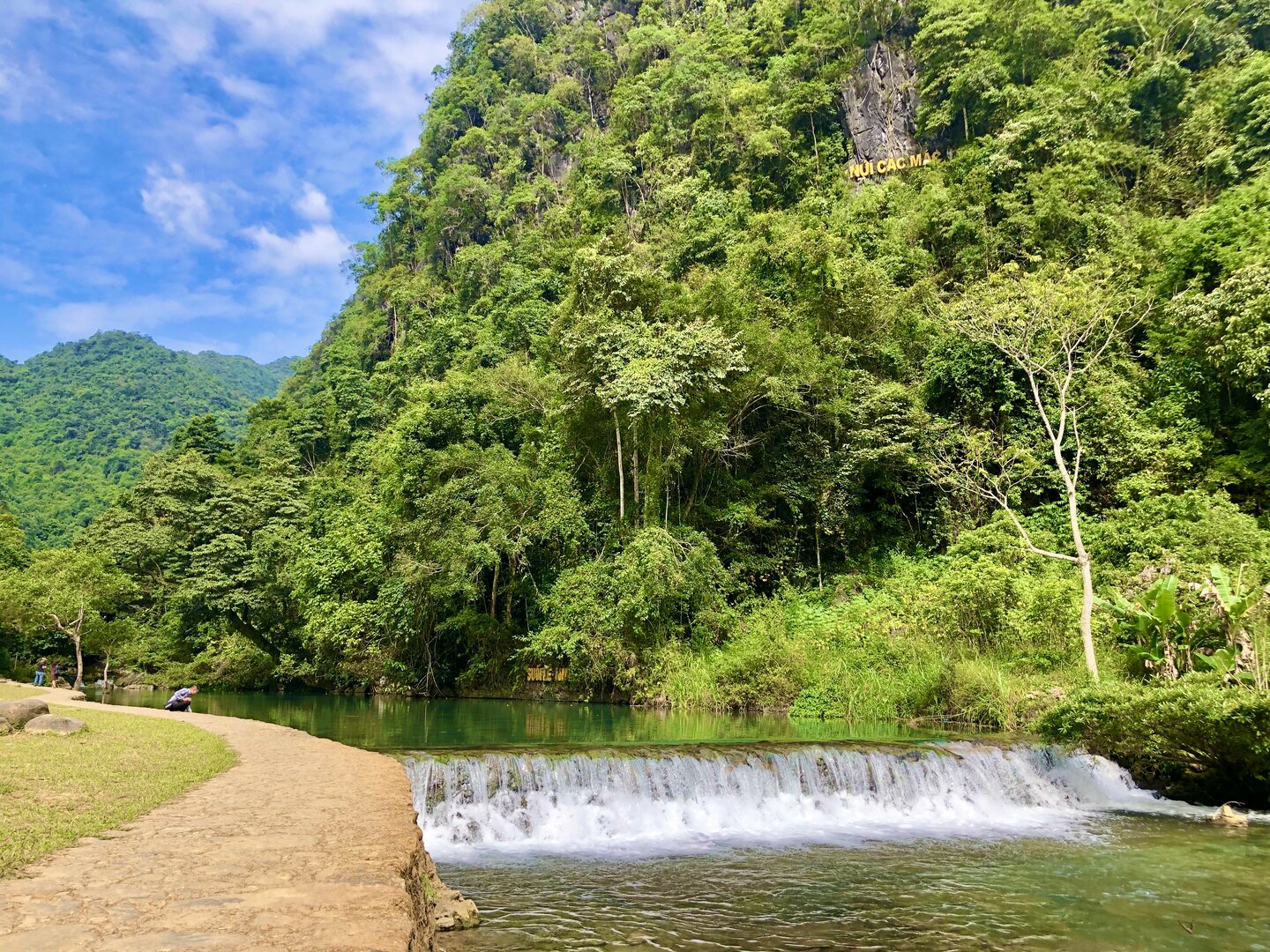
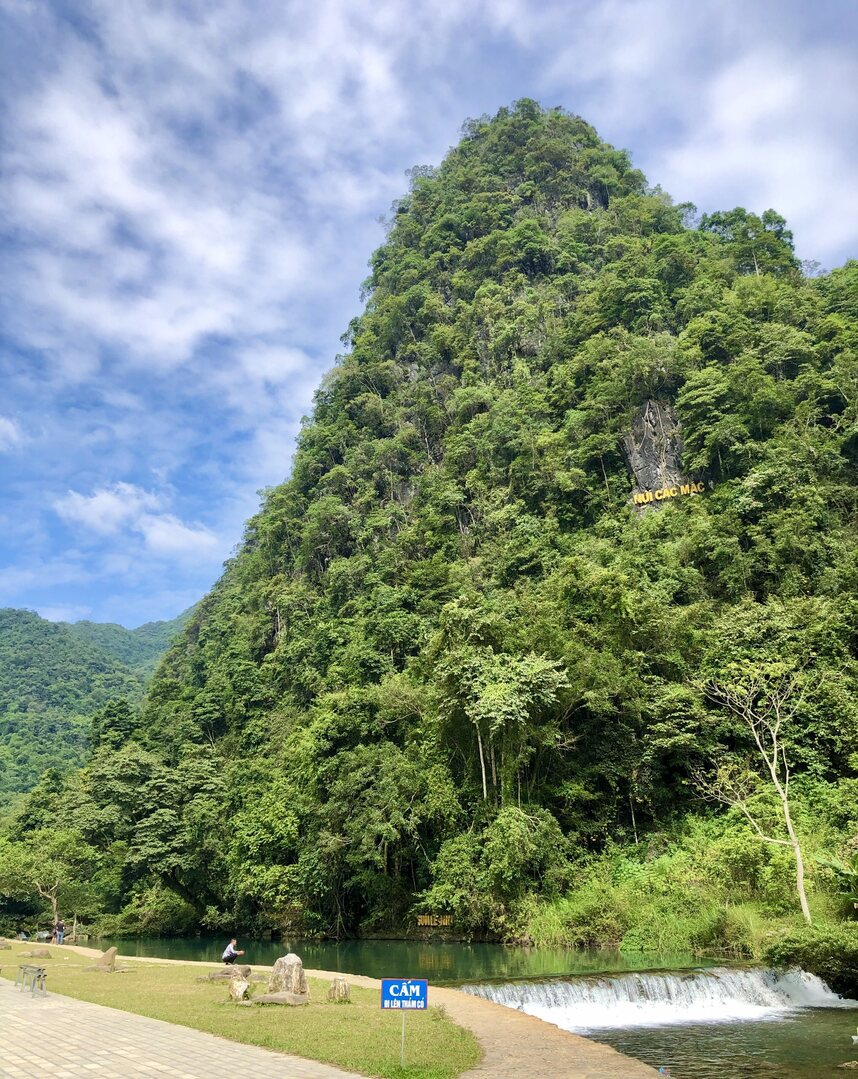
The Pac Bo National Special Historical Site, located in Truong Ha commune, Cao Bang province, 52km north of the provincial center, boasts majestic mountains and picturesque landscapes. Spanning over 295 hectares, it encompasses more than 50 historical sites, creating an attractive historical tourism complex.
On January 28, 1941, Leader Nguyen Ai Quoc (Ho Chi Minh) set foot back in Pac Bo, Cao Bang, to directly lead the Vietnamese revolutionary movement after thirty years of wandering in search of a way to save the country. This is one of the important historical sites in the system of relics and memorial museums related to the life and revolutionary activities of President Ho Chi Minh and the Central Party Committee during the period 1941-1945.
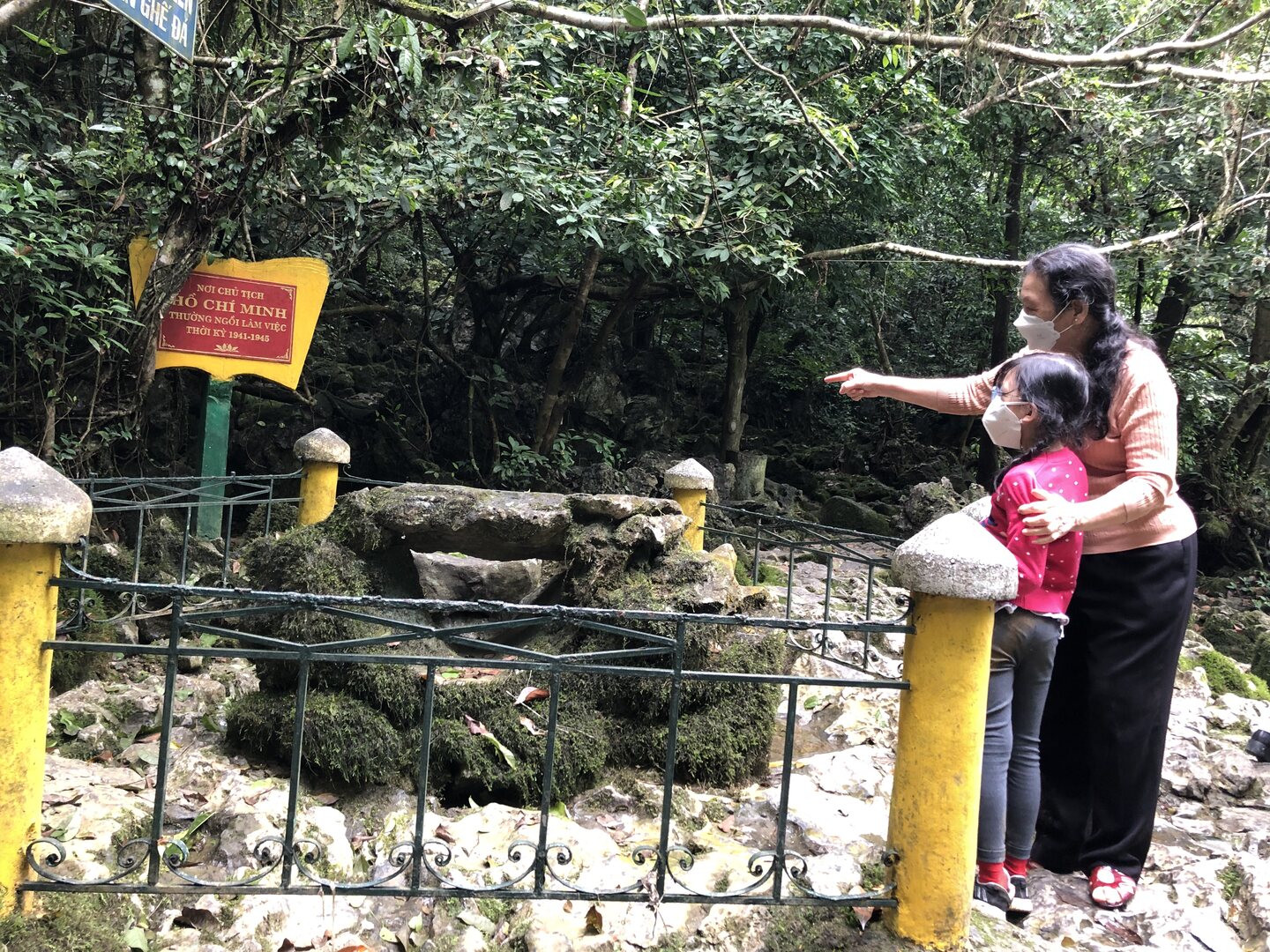
Visiting this site, tourists can explore historical landmarks of immense significance such as: Border Marker No. 108 between Vietnam and China; Lenin Stream; and Karl Marx Mountain. Coc Bo Cave; the stone table and chairs – where Uncle Ho wrote many revolutionary propaganda documents, translated the book "History of the Party"…; the Khuoi Nam hut complex – where the 8th Central Committee Conference of the Party took place, where the Vietnam Independence Newspaper (the mouthpiece of the Viet Minh Front) was founded… all these sacred places have entered history, into the consciousness of every Vietnamese citizen.
* Historical sites:
1. Ho Chi Minh Trail
The Ho Chi Minh Trail is one of the four main arterial roads running along the country and also the only road in Vietnam named after the great President Ho Chi Minh. The Ho Chi Minh Trail section from Pac Bo to Cao Bang starts from Km0+00 (in front of the memorial house of the Pac Bo Historical Site) to Km10+500, with a total length of approximately 10.118 km.
2. Ho Chi Minh Memorial Temple
The Ho Chi Minh Memorial Temple, located within the Pac Bo Special National Historical Site, was started on May 19, 2010, and inaugurated on May 19, 2011. The temple expresses the affection and aspirations of the people nationwide, and especially the people of Cao Bang province, towards the beloved President Ho Chi Minh. The temple is built in the center of the sacred land of Pac Bo, a place with majestic natural scenery and a thousand-year-old vitality, featuring unique architecture that harmoniously combines traditional Cao Bang architecture with modern elements, creating a sense of grandeur yet remaining approachable and simple.
Inside the temple, the most prominent place in the main hall is a full-body statue of President Ho Chi Minh in a serene seated posture. Above it is the inscription "Hong Nhat Cao Minh" (Red sun shining from above). To the left of the statue is an inscription of Uncle Ho's four-line poem: “Distant mountains, distant waters/It's not just vastness that defines it/Here is Lenin Stream, there is Marx Mountain/With two hands, we build a nation.” On the four walls of the temple are stone reliefs depicting the entire revolutionary life of Uncle Ho from his return to the country on February 8, 1941, to the day of national independence in August 1945.
3. Khuoi Nam and Bo Bam Headwaters Area Relics
The Khuoi Nam and Bo Bam Headwaters Area Relics are located in Truong Ha commune, Cao Bang province, near the border with China. This is a relic site comprising many historical points associated with a particularly important period in the life and work of President Ho Chi Minh and the Vietnamese revolution from 1941-1945, the period of preparation for the General Uprising to seize power throughout the country.
Headwaters Relic Complex:
- Coc Bo Cave (meaning "headwaters" in the Nung language) is approximately 80 square meters in size, with an entrance only wide enough for one person to pass through. This is where President Ho Chi Minh and his revolutionary comrades stayed from February 8, 1941, to mid-March 1941. Inside the cave, there is still a set of table and chairs where President Ho Chi Minh worked with revolutionary cadres and translated important documents.
- Ly Quoc Sung's House Foundation: This is the house where President Ho Chi Minh stayed upon his return to the country to lead the revolution (from January 28 to February 7, 1941). The house was built around 1937, in the local stilt house style.
- Lung Lan Cave: This is where President Ho Chi Minh stayed and worked from the end of March 1941. The cave is approximately 50 square meters in size.
- Ngườm Vài Cave: Here, in 1941, Uncle Ho personally attended, guided, and admitted Comrade Nông Thị Trưng into the Party. The cave is approximately 80 square meters in size.
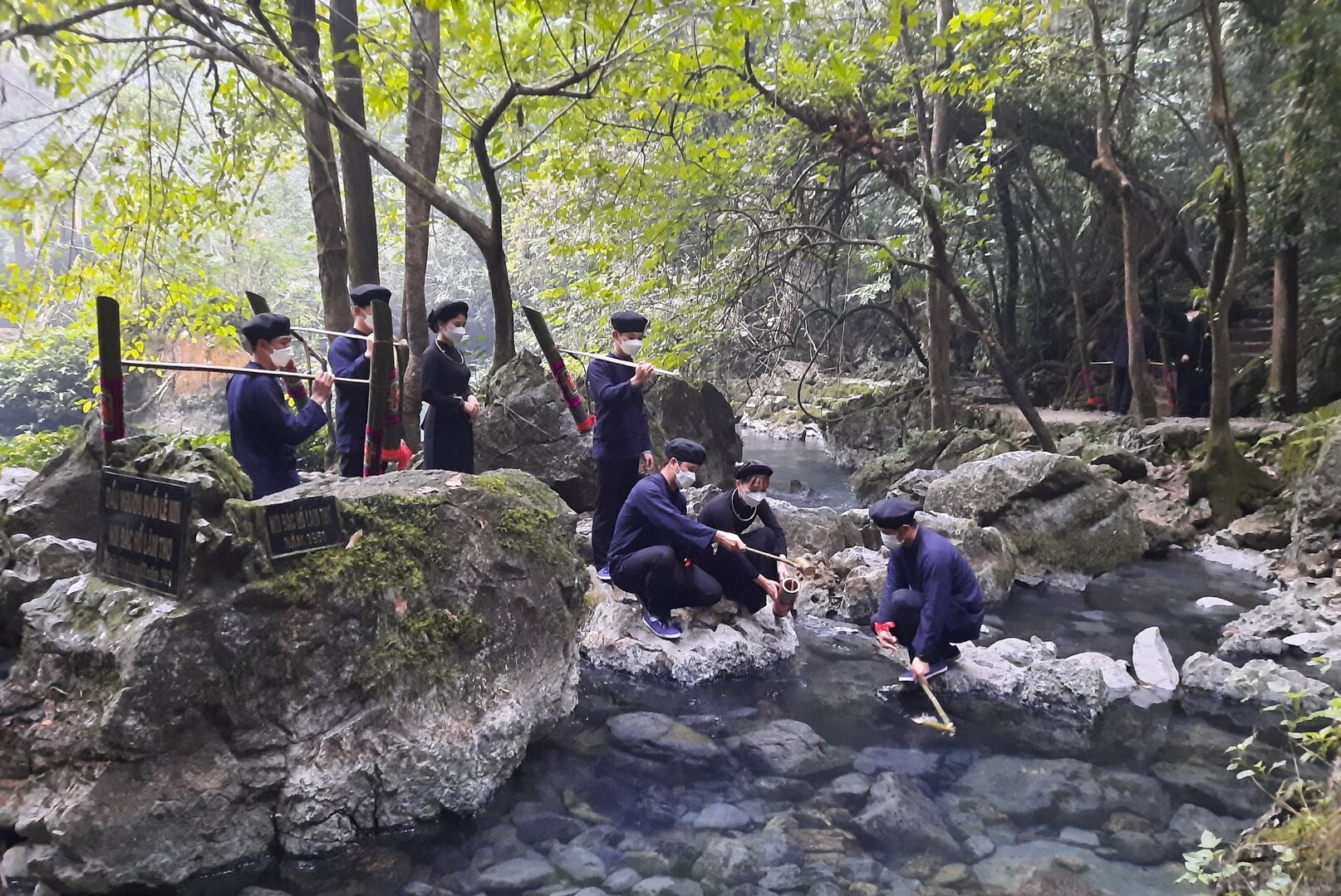
- Lenin Stream: During his time in Pác Bó, Uncle Ho often sat fishing in this stream. To this day, the site retains its relatively intact landscape.
- La Thanh's House Foundation: This was an important revolutionary base during the pre-insurrection period. It was where delegates from across the country attended the 8th Central Committee Conference of the Communist Party of Vietnam. Currently, only the old house foundation remains, covering an area of 131 square meters, with a commemorative plaque.
- Border Marker 108: Now known as Border Marker 675, it is one of the 314 old Vietnam-China border markers. It is made of a single block of stone, oval in shape, about 70 cm high, with inscriptions in Chinese and French.
- Gooc Mu rice fields: originally a hamlet within Pac Bo village; after the implementation of the policy to re-plan residential areas to establish agricultural cooperatives, Gooc Mu hamlet was moved to the center of Pac Bo. At Gooc Mu site, in 1940, the people of Pac Bo village once came here to swear an oath by cutting their blood, vowing to follow the revolution for life.
Khuoi Nam historical site complex:
- Khuoi Nam hut: where Uncle Ho stayed the longest. In addition, to ensure...