
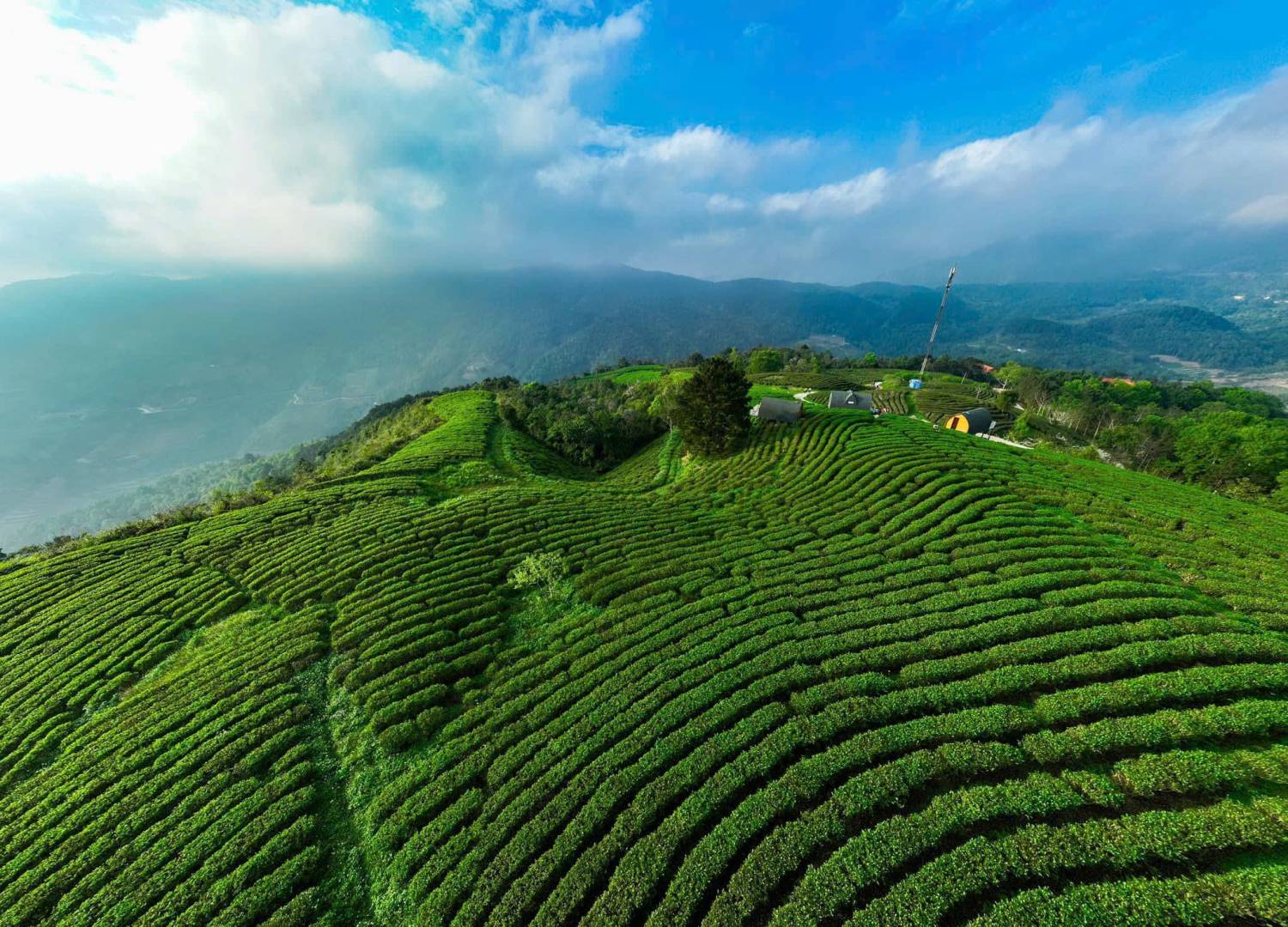
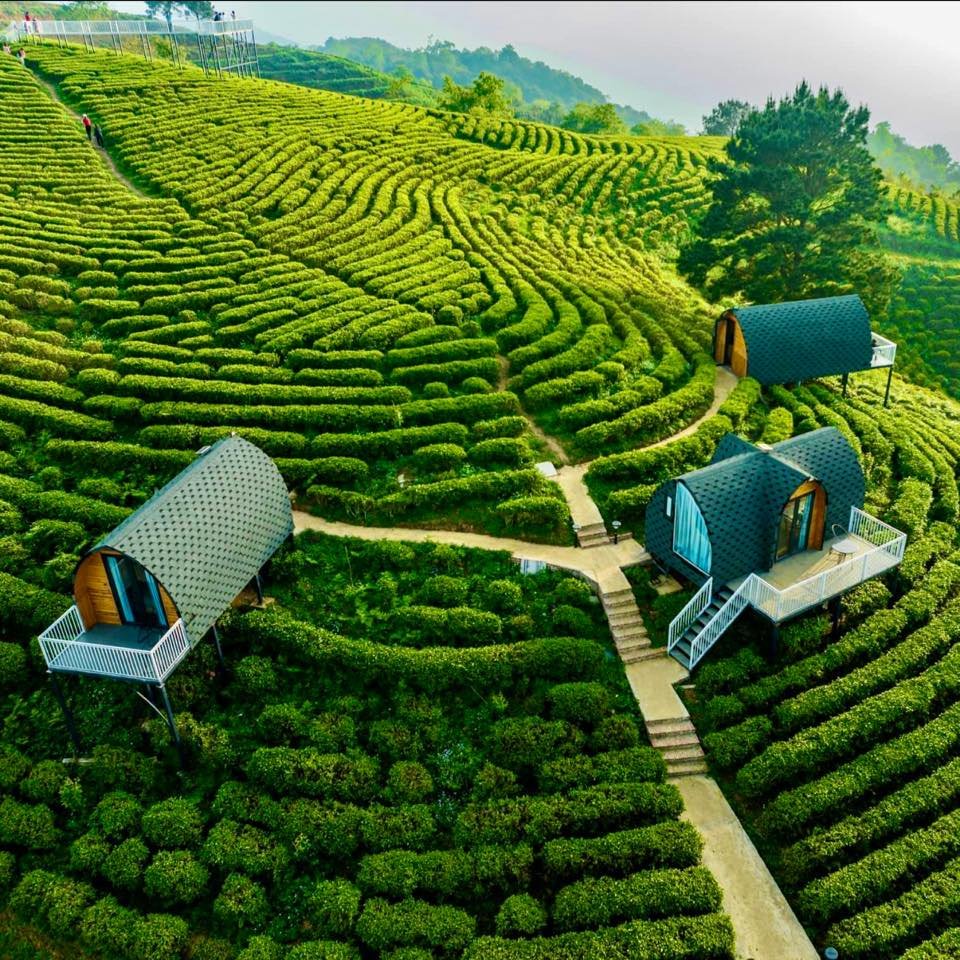
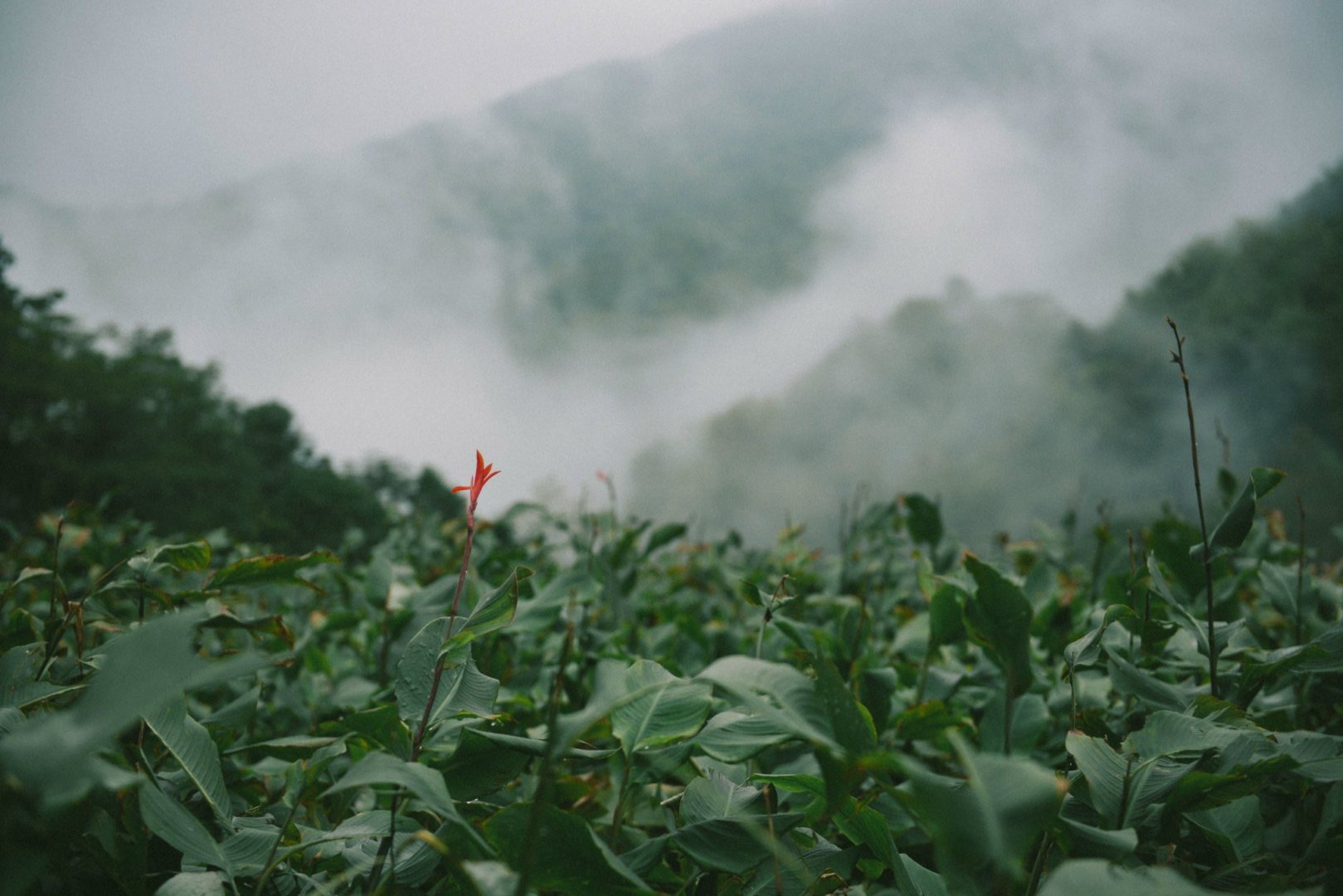
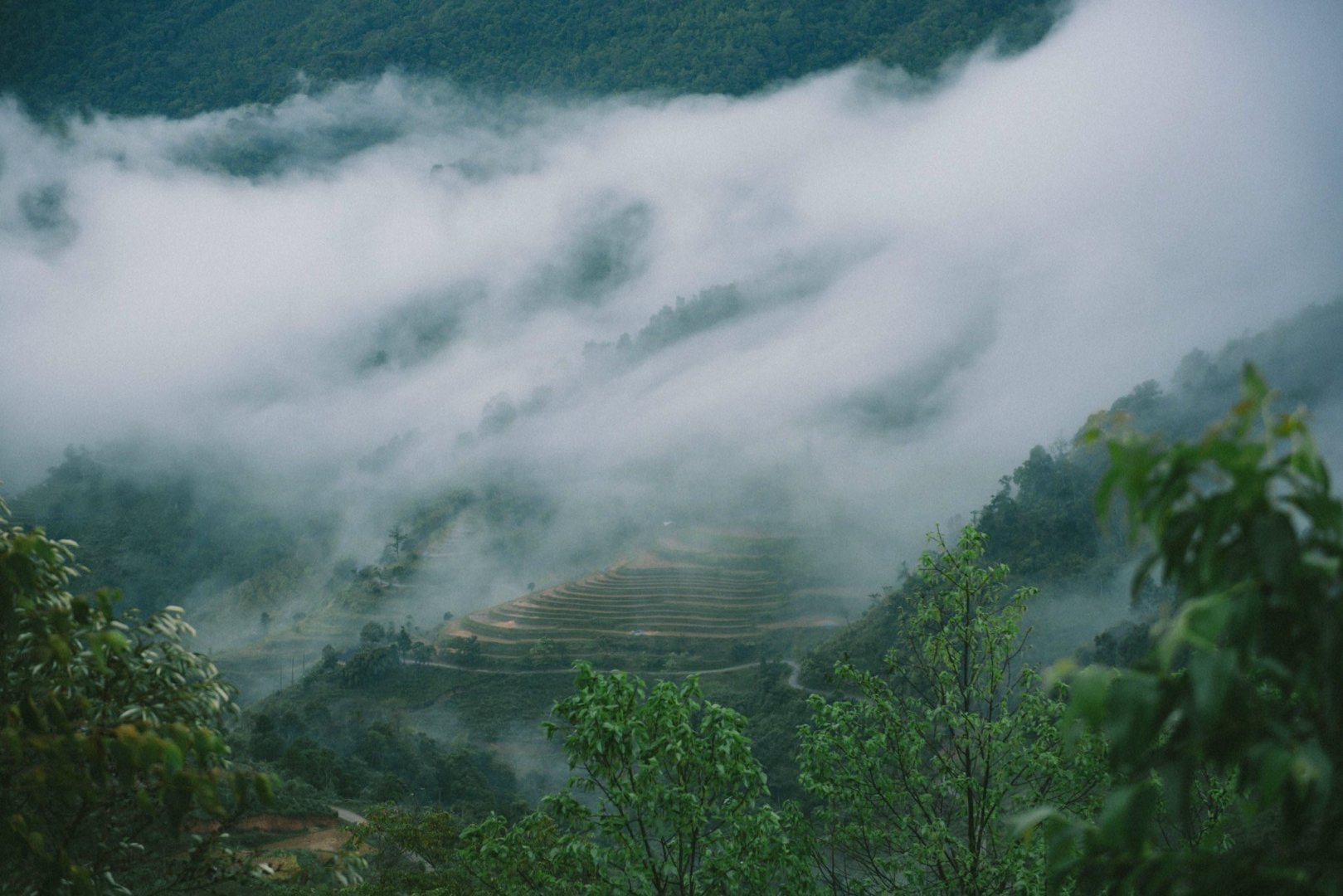
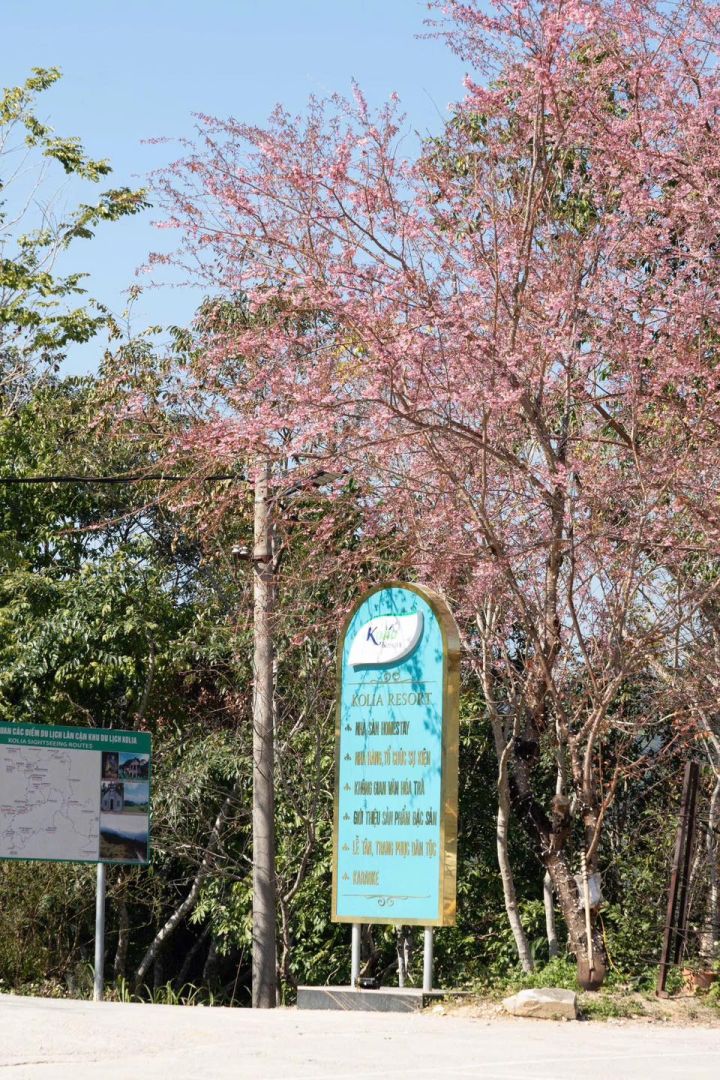
Located along the western tourist route of the Non Nuoc Cao Bang UNESCO Global Geopark, the Kolia Tea Plantation (in Thanh Cong) is a region exceptionally well-suited for tea cultivation. Visitors are often captivated by the stunning landscape—a harmonious blend of nature’s beauty and human craftsmanship—where the scenery is blanketed in the fresh, vibrant green of tea bushes and the lush vegetation of the surrounding forests.
At the Kolia Tea Plantation, visitors can take in the majestic mountain vistas, reach out to touch the golden sunlight and wispy white clouds, and marvel at the wonders of the natural world. Kolia Co., Ltd. has harnessed these inherent advantages and potential, successfully building a distinct brand for the Phja Den area.
The Stories Behind the Kolia Tea Plantation
This place holds a history marked by many ups and downs, tracing the transformation of the land from a wild, untamed wilderness into vast, cloud-kissed Oolong tea plantations.
1. A Legacy Rooted in the French Colonial Era
- The origins of today’s Kolia Tea Plantation date back to the early 20th century. When the French surveyed the Phja Oac – Phja Den mountain range—with the intention of developing a resort area and extracting mineral resources—they discovered that the subtropical climate, year-round mist, and granite-derived ferrallitic soil were ideal for growing high-quality tea varieties. During this period, small-scale experimental tea plantations were established around the base of the Kolia Pass. 2. “Awakening” the wasteland: A modern enterprise’s initiative
- After decades of neglect due to war and historical upheaval, this land was finally “awakened” in the early 21st century (around 2011). A private enterprise—Kolia Cao Bang Joint Stock Company—decided to invest in and reclaim the wild, weed-covered hills surrounding the Kolia Pass, transforming them into a large-scale, eco-friendly tea plantation.
The company went to great lengths to introduce high-quality Oolong tea varieties from Taiwan for experimental cultivation. Despite the harsh winter conditions—including frost and snow—the first Oolong tea plants took deep root in the soil of Phja Den, marking the beginning of a new chapter for what is now known as “organic tea grown in the clouds.”
3. Current scale and production capacity
- Land area: The Kolia tea plantation is currently developed across several dozen hectares (with plans to expand to over 100 hectares), situated at an altitude of 1,000 to 1,300 meters above sea level.
- Production and yield: By adhering to strict organic farming practices—utilizing biological fertilizers and natural spring water flowing from the granite formations of Phja Oac—the plantation harvests dozens of tons of high-quality finished tea annually. Key products, including Thanh Tam Oolong, Thuy Ngoc Oolong, and Phja Den black tea, are exported to demanding international markets and have earned high-level OCOP (One Commune, One Product) certification from Cao Bang Province. 4. Introducing the experience: Picking tea leaves and enjoying tea amidst a sea of clouds
- At the Kolia tea plantation, visitors can immerse themselves in unique eco-agricultural tourism experiences:
- Become a Dao Tien woman for a day: Don traditional Dao Tien attire—adorned with intricate beeswax-printed patterns—and carry a small bamboo basket on your back as you step into the tea rows that wind along the hillside. Local artisans will guide you through the "one bud, two leaves" picking technique, practiced early in the morning while the dew still clings to the tender new shoots.
- Discover the artisanal processing craft: After harvesting, explore the processing facility to learn about the rigorous stages—withering, rolling, fermenting, and drying—that transform the leaves into the tightly rolled, spherical Oolong tea pearls.
- Sip tea atop a mist-covered hill: The highlight of the visit is sitting in a scenic pavilion nestled within the tea plantation, brewing a pot of hot Oolong tea using pure spring water from Mount Phja Oắc. The tea’s sweet, lingering aftertaste and delicate floral aroma, combined with the cool breeze and a sea of clouds drifting beneath your feet, create an experience of absolute tranquility.
5. How has tea cultivation transformed the lives of the local ethnic communities? - The emergence and development of the Kolia tea plantation have sparked a “revolution” that has transformed the lives of the local ethnic minority communities (primarily the Dao Tien and Hmong peoples):
- Effective crop restructuring: Previously, the local people relied mainly on cultivating corn and upland rice on steep hillsides—practices that yielded very low returns and left them trapped in a cycle of year-round poverty, entirely dependent on the weather. The introduction of tea cultivation has generated significantly higher economic value, providing residents with a stable and sustainable source of income.
- Local job creation and reduced migration: The tea plantation has employed hundreds of local residents—both in permanent and seasonal roles—across various stages, from planting, tending, and harvesting to processing. Instead of having to seek work far away in major cities or near the borders, people can now build their livelihoods in their own homeland, earning a steady income that allows them to properly support their children’s education.
- Raising awareness of clean agriculture and tourism: Through their partnership with the plantation, the Dao Tien people have gained access to modern organic farming techniques,