
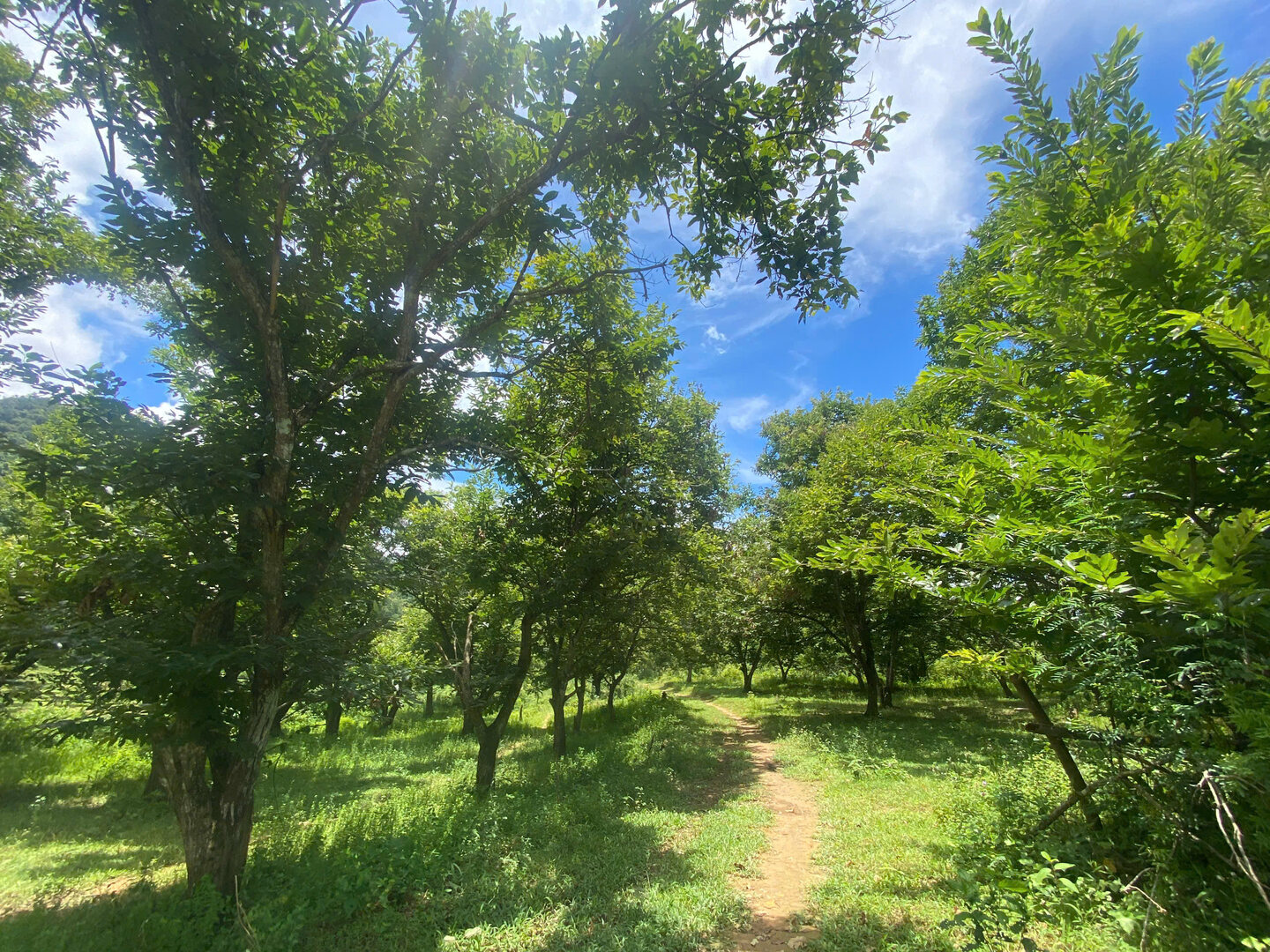
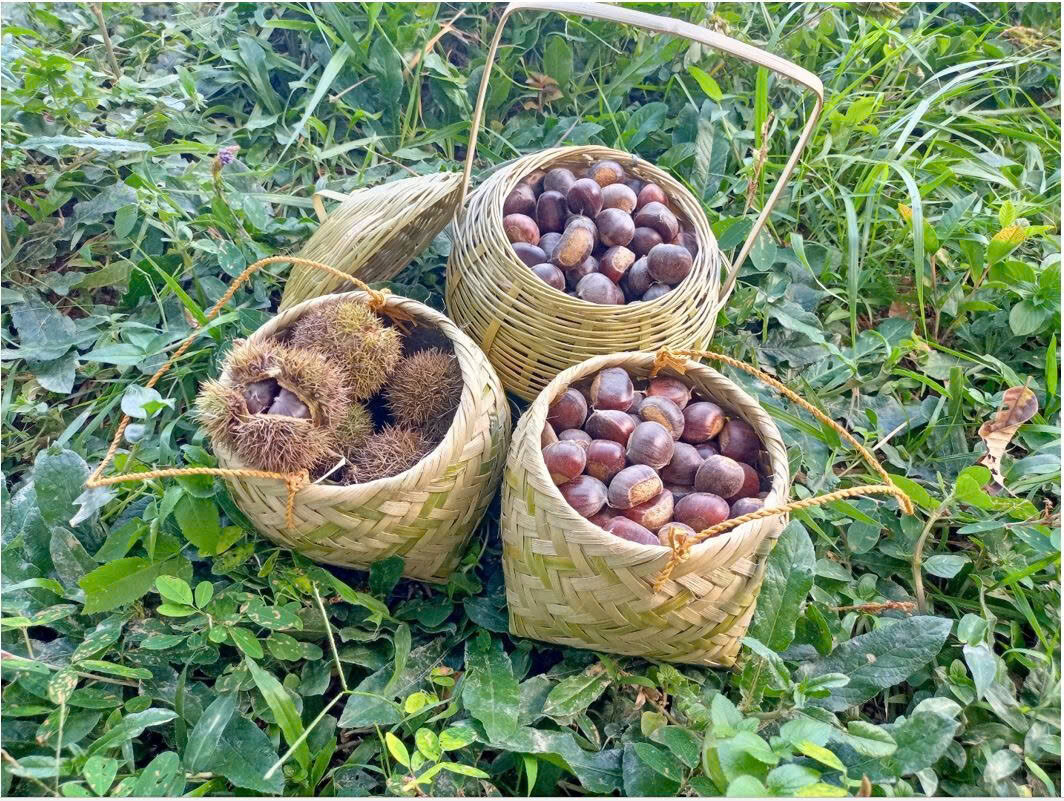
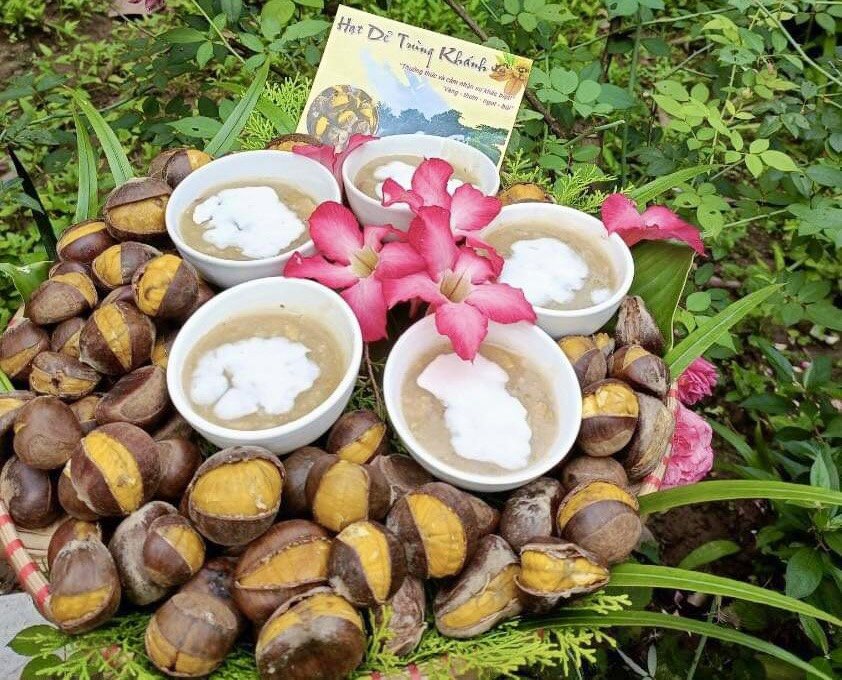
The chestnut orchards in Ban Khay, Dam Thuy Commune—where chestnut trees (known locally as "Mac Lich") were first introduced to Vietnam by the French in the late 19th century—thrive due to the region’s unique soil, geography, and climate. Trung Khanh chestnuts are widely considered the best in Vietnam; those from Ban Khay are characterized by their thick, spiny husks and consistent, golden-yellow kernels. A standout feature here is a 4-hectare orchard belonging to the family of Mr. Nong Van Phuc, which houses an ancient chestnut tree—120 years old, with a circumference of 3.13 meters, a height of approximately 15 meters, and a canopy spanning 14 meters—that was officially recognized as a "Vietnamese Heritage Tree" in 2016.
Visiting Ban Khay—a village inhabited entirely by the Tay ethnic group—travelers can join the locals in harvesting and processing chestnuts using traditional methods, such as roasting them in cast-iron pans over wood-fired stoves in stilt houses. Visitors can savor the unforgettable, rich, and sweet flavor of the nuts, and explore various chestnut-based delicacies, including chestnut *com* (young green rice flakes), chestnut sticky rice, and chestnut-infused liquor.
1. Cultivation Area and Yield:
- Chestnut trees have long been deeply intertwined with the lives of the local Tay and Nung people. Benefiting from a year-round cool climate and unique limestone-rich soil at an altitude of 450–600 meters, these trees flourish, producing nuts with a distinctively fragrant, nutty flavor and a lingering sweetness—a quality unmatched by any other region.
- Cultivation Area: Currently, the total area dedicated to chestnut cultivation spans nearly 700 hectares. The trees are concentrated in key communes, including Dinh Phong, Dam Thuy, and the town of Trung Khanh. In the border commune of Dinh Phong and its surrounding areas, ancient chestnut groves—decades old—intermingle with newly planted orchards, creating a vast, lush green landscape.
- Yield and Productivity: The average yield ranges from 20 to 25 quintals per hectare (approximately 2–2.5 tons/ha). During the annual harvest season (roughly from September to November), the orchards bustle with traders and tourists who arrive to purchase the nuts directly from the source, with prices typically ranging from 130,000 to 150,000 VND per kilogram.
2. Experiential Tourism Model: “A Day as a Local Farmer”
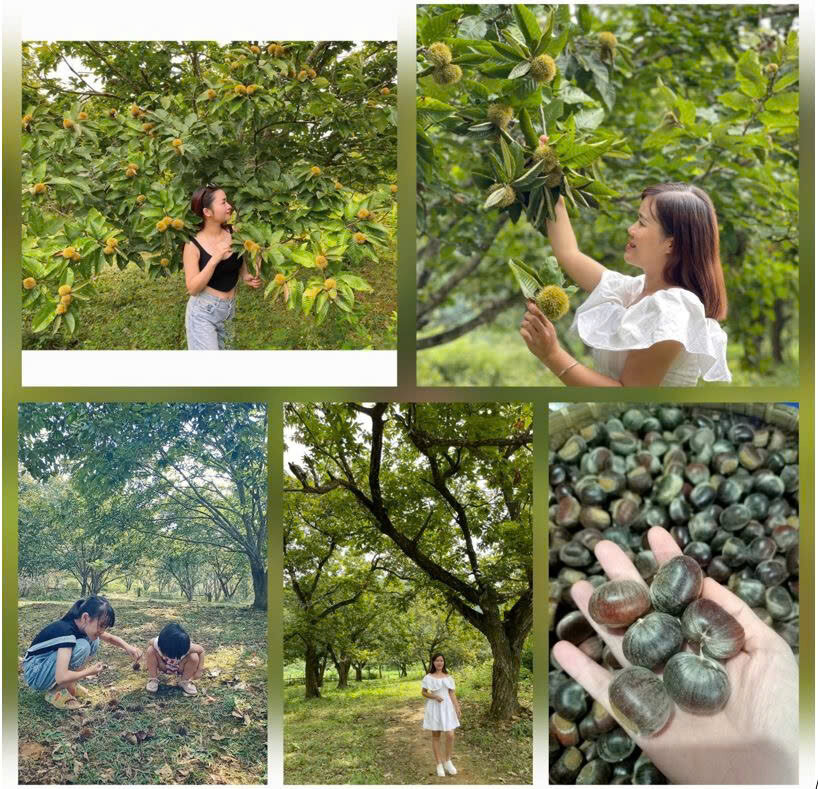
- Hand-picking early-season chestnuts: When ripe, the chestnut’s prickly outer husk splits open, allowing the nuts to fall onto the grass below. Visitors are provided with bamboo tongs and baskets, then guided by young Tay and Nung women through the cool shade of the ancient trees to gather the glossy, dew-kissed chestnuts.
- On-site husking and preparation: The process of using bamboo tongs to peel away the thorny husks, lighting a fire, and roasting the chestnuts is a truly delightful experience. The rich, nutty aroma of the roasting chestnuts, mingling with the smoke from village hearths amidst the vast wilderness, creates an unforgettable memory.
- Engaging with local culture: Beyond immersing themselves in nature, visitors can learn the stories behind the chestnut trees, enjoy traditional *Then* singing accompanied by the rustic *Tinh* lute, and share a glass of chestnut-infused liquor with the local residents. 3. Dishes Prepared with Chestnuts
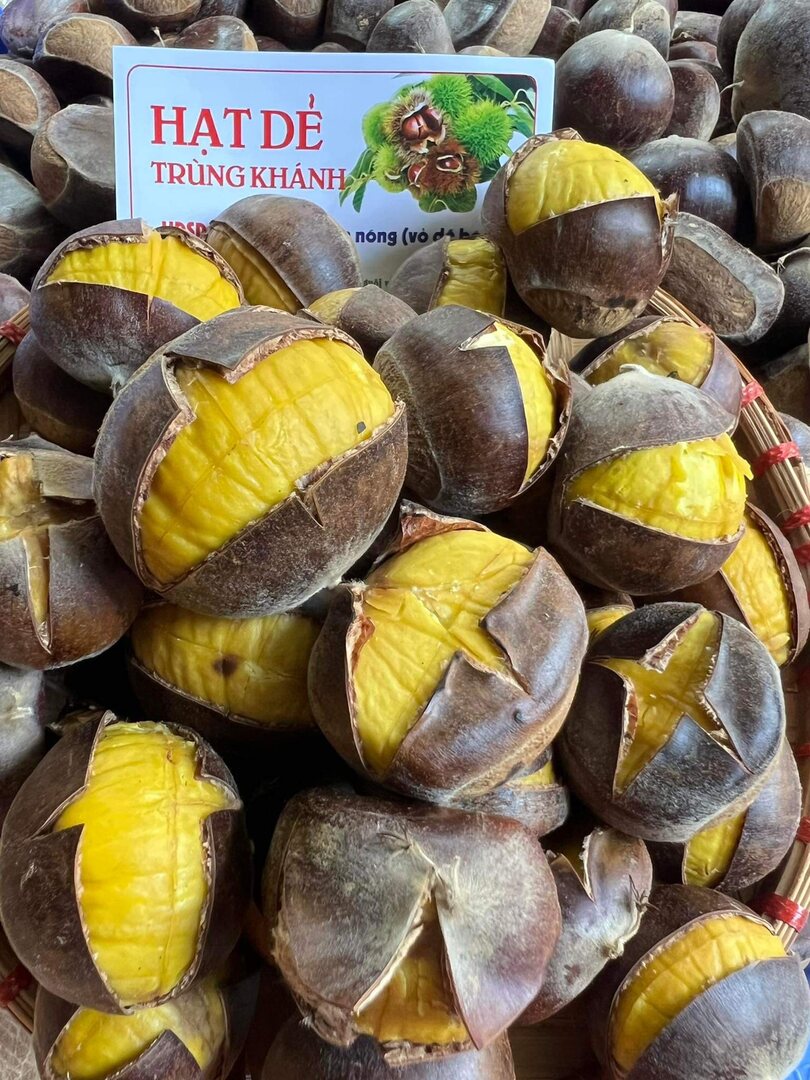
- Roasted Chestnuts: The most traditional and popular preparation method. Chestnuts are lightly scored, boiled, and then either roasted until dry or cooked directly in hot sand within a cast-iron pan until the shells crack open, releasing an enticing, fragrant aroma.
- Chestnut Sticky Rice: Fragrant, chewy upland glutinous rice is steamed together with chestnuts—either whole or crushed. The sticky, nutty texture of the rice blends perfectly with the rich, sweet, and savory flavor of the chestnuts, creating a delicious and comforting breakfast dish.
- Chestnut Pastries: These delightful little pastries feature a crispy, golden-fried wheat-flour crust encasing a smooth, finely ground chestnut filling that is delicately sweet and rich in flavor. They are a must-buy snack for anyone visiting Cao Bang.
- Chestnut-Stewed Pork Trotters/Chicken: Chestnuts are an excellent ingredient for nutritious stews. When simmered with pork trotters or free-range chicken, they absorb the savory, fatty juices of the meat, becoming tender and moist—melting in the mouth while offering significant health benefits.
- Chestnut Sweet Soup (Chè): A refreshing dessert made by simmering chestnuts until soft, then sweetening them with sugar or sugarcane molasses, often accented with a hint of ginger and the delicate fragrance of pomelo blossoms.
- Chestnut Wine: Chestnuts can also be fermented to produce a specialty liquor, known for its robust yet smooth flavor—a perfect accompaniment for celebrations and social gatherings. A journey to explore the chestnut orchards of Trung Khanh, Dinh Phong, and Dam Thuy not only transports you to a pristine natural environment but also serves as an excursion that awakens all your senses through unique local cuisine. This autumn, pack your bags and visit the "capital" of chestnuts to experience for yourself this wonderful gift bestowed by nature upon the land of Non Nuoc Cao Bang.