
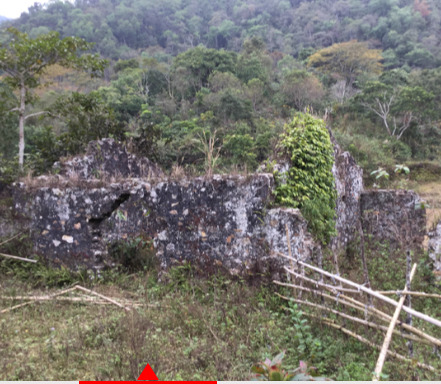
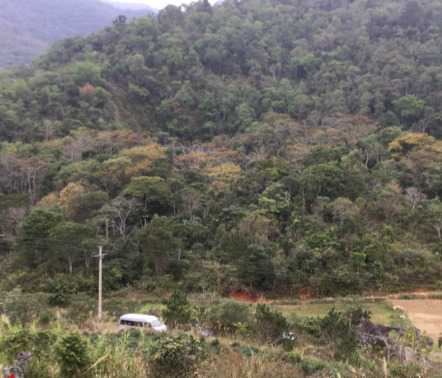
The Bản Ổ tin-tungsten mine is located in Thành Công commune. Situated east of the Phja Oắc mountain range, it was exploited by the French starting in 1908.
The origin and distribution of minerals in this mine are similar to those in the Lũng Mười mine: in quartz veins cutting through the Phja Oắc granite massif, formed approximately 100 million years ago.
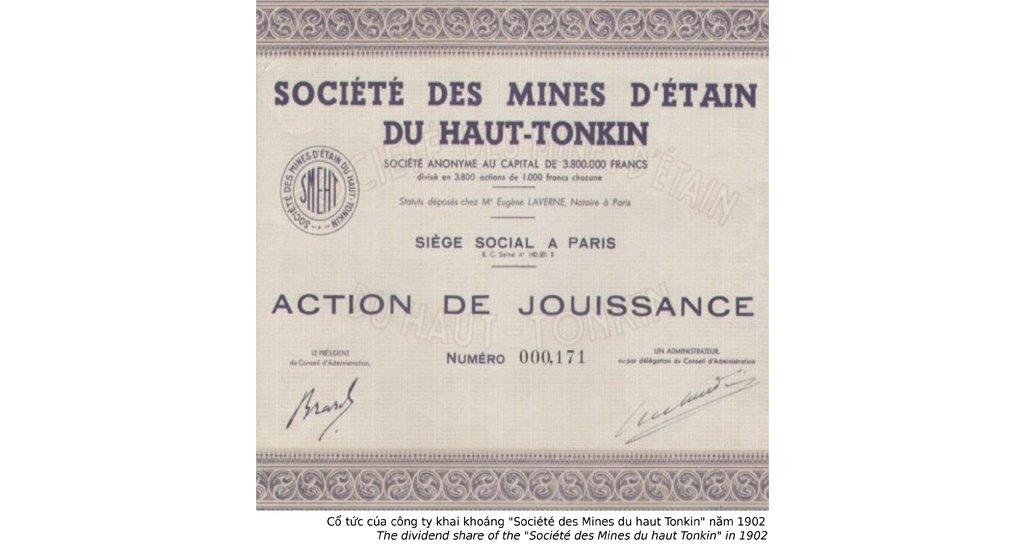
In 1902, a French company called the Upper Tonkin Tin Mining Company was established to exploit tin-tungsten mineral deposits in the Phja Oắc area (the Tĩnh Túc tin mine was exploited by a different French company).
In 1910, the tin-tungsten mining capacity in Phja Oắc was approximately 225 tons, increasing to 384 tons in 1937. The raw minerals were exported directly for use in France until 1938, after which they were exported to Singapore for processing.
The French in charge of the mine lived in typical "colonial houses," such as the red villa with distinctive French architecture that remains to this day. The mine workers were mainly Chinese and Vietnamese from Hai Phong and the Northern Delta region.