
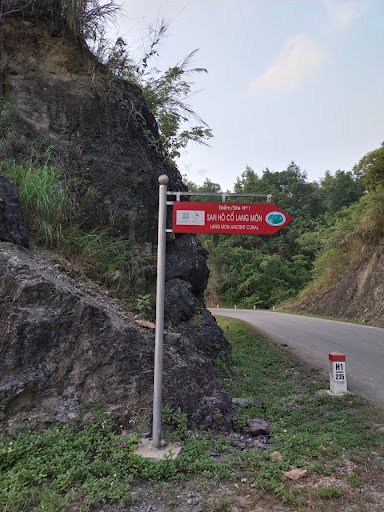
400 million years ago, this area was a shallow sea. Sediment deposits from here formed limestone and preserved a large amount of paleontological fossils, evidence of a long-lasting and very rich ancient marine environment in the past.
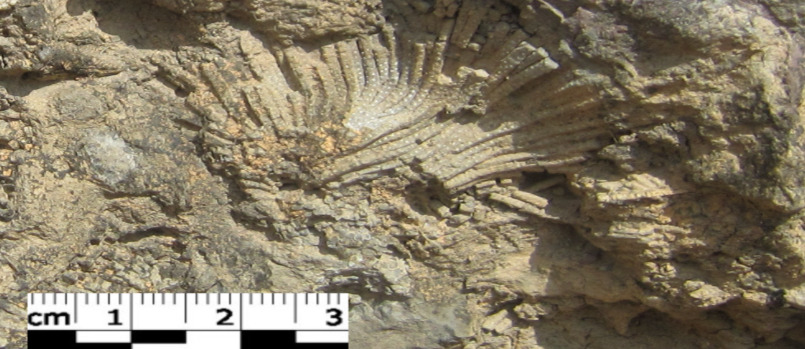
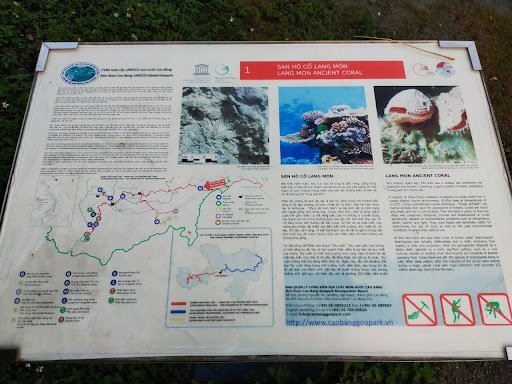
Most of these paleontologists are corals, living in shallow sea environments at depths of about 20-50m, temperatures of 18-20°C. Corals (scientific name Anthozoa - "flower-shaped animals") are organisms with an external appearance resembling flowers. They are round, small, and live in colonies of many individual organisms. Corals cannot move, so coral fossils are usually well preserved. Furthermore, corals only live in very specific environments. Their existence and development depend heavily on environmental conditions such as temperature, depth, salinity, and light. Therefore, coral fossils are very valuable in determining the age of the rocks containing them as well as the paleoenvironmental conditions where they once lived.
Fossils of "Coiled Arms" were also found here. Coiled arms were almost defenseless; their only protection was their soft shell. They had hard, fleshy feet (small stalks) that attached themselves to the seabed surface, such as exposed bedrock, boulders, or other shellfish. Coiled arms could not actively forage for food. Today, about 300 species of coiled arms still live in cold, deep seawater environments, while most species of this group became extinct in the global biodiversity crisis that occurred about 252 million years ago.